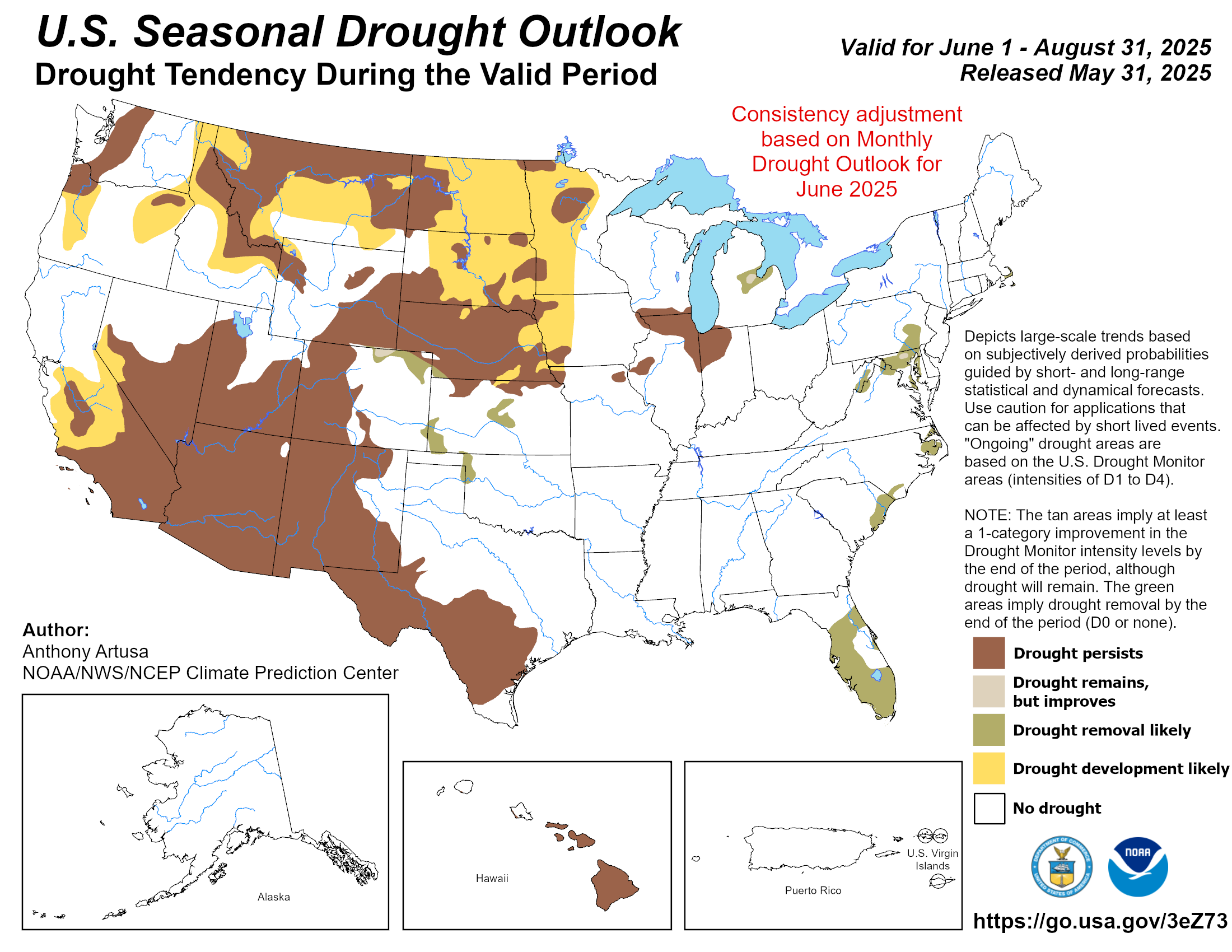


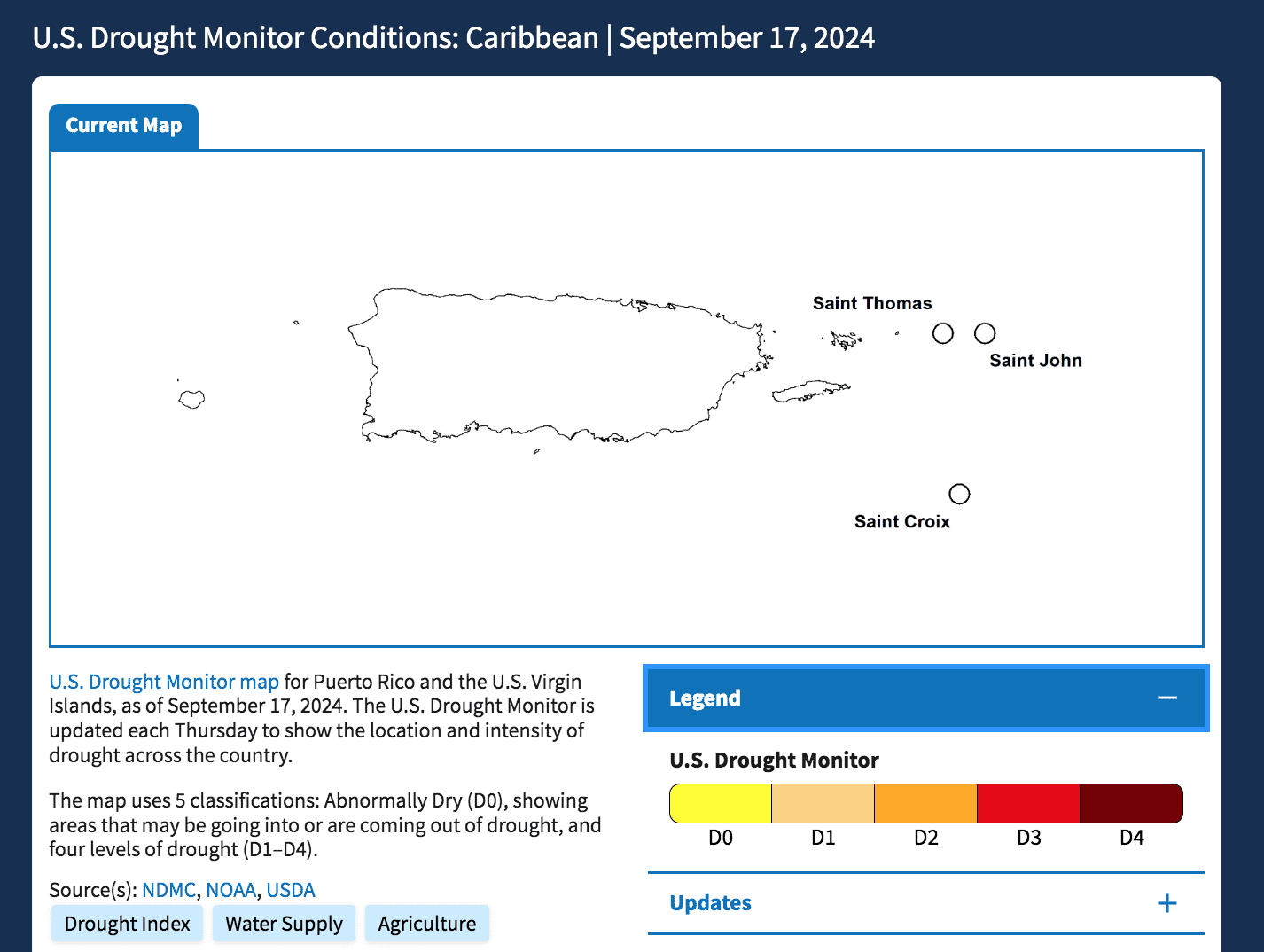
Significant rainfall, due in large part to Tropical Storm Ernesto in August, has resulted in the U.S. Virgin Islands and Puerto Rico remaining free of drought, and both U.S. territories are expected to remain drought-free through the end of 2024.
“Wetter than normal conditions [are] expected to persist across Puerto Rico and the Virgin Islands, and drought development is unlikely through the rest of the year,” according to information contained in an update released on September 19 from the National Integrated Drought Information System (NIDIS), the National Oceanic and Atmospheric Administration (NOAA), the National Weather Service, and numerous partners, including the U.S. Department of Agriculture and the University of the Virgin Islands.
The report noted that recent heavy precipitation associated with Tropical Storm Ernesto, which passed across the U.S. Virgin Islands and Puerto Rico on Aug. 14 and additional rain events over the last few months have kept the ground wet across the local islands, avoiding drought conditions.
“Tropical Cyclone Ernesto, along with other weather systems, brought significant rainfall to Puerto Rico and the Virgin Islands, maintaining saturated soils and elevated streams and keeping the water reservoirs replenished,” the report explained.
Excessive Rainfall
The drought report explained that areas across Puerto Rico and all three major islands across the USVI have recently received above-average rainfall.
“Puerto Rico has been drought-free since late April, and the Virgin Islands since late February,” the report noted.
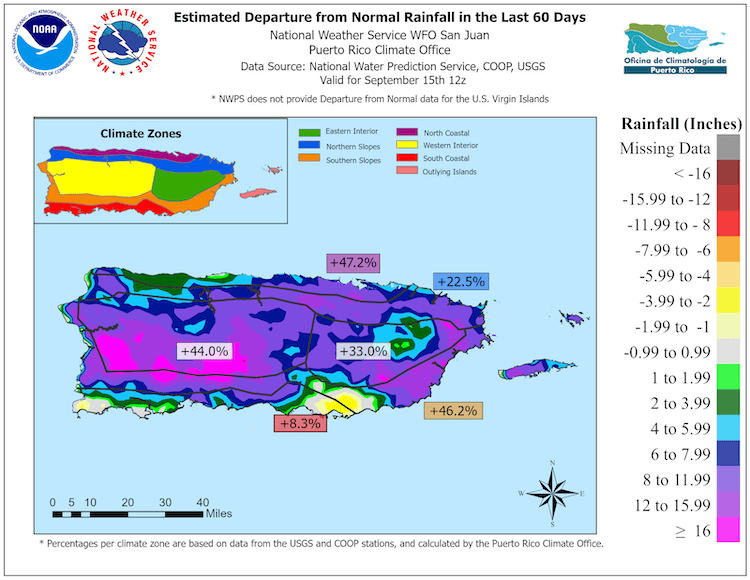
“Most of Puerto Rico experienced above-normal precipitation through the last two months, [and] the most significant weather event during this period was Tropical Cyclone Ernesto, which brought significant flooding to the interior, west, east, and northern portions of Puerto Rico,” the report explained. “Rainfall amounts reached nearly 15 inches in a 48-hour period along the interior municipalities,” the report continued.
“[In summary,] almost all of Puerto Rico observed above-normal rainfall in the past 60 days, [and] most of the area was 8 to 11 inches above [average], with some areas in the interior and west collecting over 16 inches more than normal,” the report noted.
The excessive rainfall was similar across the U.S. Virgin Islands.
“Well-above-normal precipitation was observed across the U.S. Virgin Islands (USVI) in the last 60 days,” the report revealed. “In St. Croix, amounts ranged from nearly nine to over 20 inches of rainfall, while 13 to 17 inches of rainfall were collected in St. Thomas and St. John.”
“Year-to-date, several locations in St. Croix and St. Thomas have already seen more than 50 inches of rain, [and] as a result, there was an increase in flooding reports,” the report stated.
“The nearly continuous rainfall events across the Virgin Islands [and also in Puerto Rico] were beneficial to the underground wells monitored by the U.S. Geological Survey,” the report said. “The well in St. Croix recovered to levels not seen since March 2021.”
Hot temperatures were also noted across the local islands.
“Mean temperatures over the past two months were 1 to 2 degrees Fahrenheit above average across the region,” the report detailed. “Several [weather] stations ranked in the top three warmest [temperatures] for the period [between] July 16 [through] September 17 (with San Juan recording its warmest mean temperature over this two-month period) in a record going back to 1898. This continues a trend of record warm temperatures in the region that extends back over the past two years.”
With excessive heat continuing across the region, residents and visitors are reminded to stay hydrated and cool to help avoid heat-related illnesses.
Extreme Weather Effects Across USVI and Puerto Rico
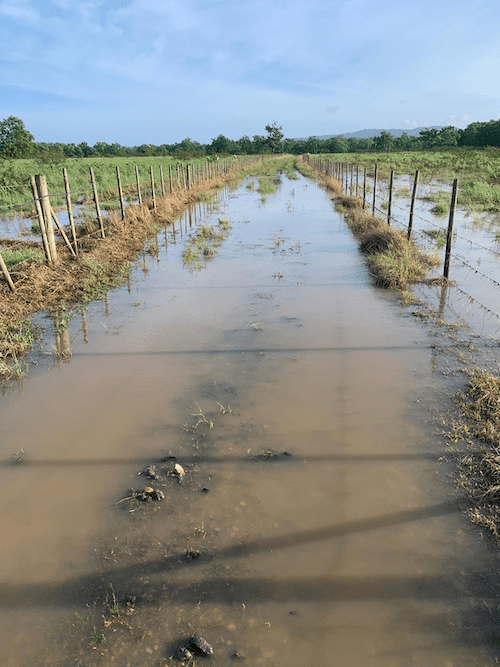
While the rain has been beneficial to help avoid drought, it has caused problems for farmers and agriculturalists. During the last few months, the high rainfall across both U.S. territories resulted in flooding and mudslides.
Puerto Rico Impacts
“July and August were months of continuous rains that impacted farms and food production in Puerto Rico,” the drought report stated. “The passage of Tropical Storm Ernesto in mid-August caused landslides and damage to access roads to farms, as well as flooding and crop losses. Rains also led to an incidence of fungi and crop damage in some areas with high humidity, such as the island municipalities of Vieques and Culebra. Farmers reported dry patches in some regions of the southwest.”
USVI Impacts
“Fruit trees and crops were impacted by the heavy rain and high winds from Tropical Storm Ernesto, [and] the storm also created silt plumes on the islands that increased sediment in the coastal waters and impacted some fisheries,” the report said.
The drought report provided additional details about impacts to the three major islands across the USVI:
St. Thomas: “Recent storms and rains filled ponds, and vegetation is bouncing back from previous dry periods. Livestock and poultry farmers have access to feed. Following Tropical Storm Ernesto, many farmers reported a lack of access to roads due to erosion and landslides on farms in the Bordeaux area, which impacted operations. Farms impacted by storm-associated flooding reported lost crops and downed fruit trees.”
St. John: “Row and specialty crop farmers report that heavy rains have caused mold, mildew, and crop losses. Tropical Storm Ernesto downed fruit trees and caused additional losses from flooding. While some farms are focusing on post-storm clean up and land preparation, others are rotating crops and planting microgreens, fruit trees, and quick crops to keep production up.”
St. Croix: “Tropical Storm Ernesto caused tree damage and soil loss that impacted operations. Livestock farmers are planning for potential feed shortages later in the year associated with hotter months.”
Stay Informed About the Drought
The possibility of precipitation is expected to continue through the end of the year, and Puerto Rico and the U.S. Virgin Islands are anticipated to remain drought-free.
“Conditions are expected to remain on the wet side through the end of the calendar year,” the drought report said. Most [areas across both U.S.] territories should remain free of dryness or drought, but isolated sections of the islands (such as southeastern Puerto Rico) may continue to experience below-normal rainfall.”
“In contrast, temperatures will also be above normal throughout the same period,” the report explained. “Higher-than-normal temperatures could increase the evapotranspiration rates across the area, affecting the crops in these isolated areas that do not receive as much rain,” the report said.
“[In conclusion,] no drought is expected to develop over the next three months in Puerto Rico or the USVI, according to the current NOAA Climate Prediction Center’s Seasonal Drought Outlook,” the update stated.
Residents and agriculturalists can stay updated on the latest drought information on the NIDIS website.
Additionally, the local weather forecast for the U.S. Virgin Islands is regularly updated on the Source Weather Page and VI Source YouTube Channel.
In the short term, the Climate Prediction Center’s Global Tropics Hazards Outlook has forecast an increased possibility of cyclonic development over the next few weeks, potentially raising the risk of receiving storms and more precipitation.
Notably, Hurricane Helene continues to intensify in the Gulf of Mexico as it heads toward Florida, and several tropical waves are being monitored by the National Hurricane Center (NHC) in the Atlantic. Residents and visitors across the territory are urged to remain vigilant throughout the remainder of hurricane season and monitor the NHC for updates.
Individuals can also sign up for emergency alerts from the Virgin Islands Territorial Emergency Management Agency and find more information from the National Weather Service.