


National Hurricane Preparedness Week will take place from May 3 through May 9. The event urges residents across hurricane-prone areas, including the U.S. Virgin Islands and Puerto Rico, to review emergency plans before the Atlantic hurricane season officially begins on June 1.
The annual campaign, led by the National Oceanic and Atmospheric Administration and the National Weather Service, is designed to help communities prepare before, during, and after a tropical cyclone threatens.
Each day throughout Hurricane Preparedness Week, there is a daily theme that focuses on key preparedness topics. The precaution tools include knowing your risk from wind and water, preparing before hurricane season, understanding forecast information, knowing what to do when a storm threatens, staying protected during storms, avoiding danger after storms, and taking action today.
Storms Can Bring Multiple Hazards
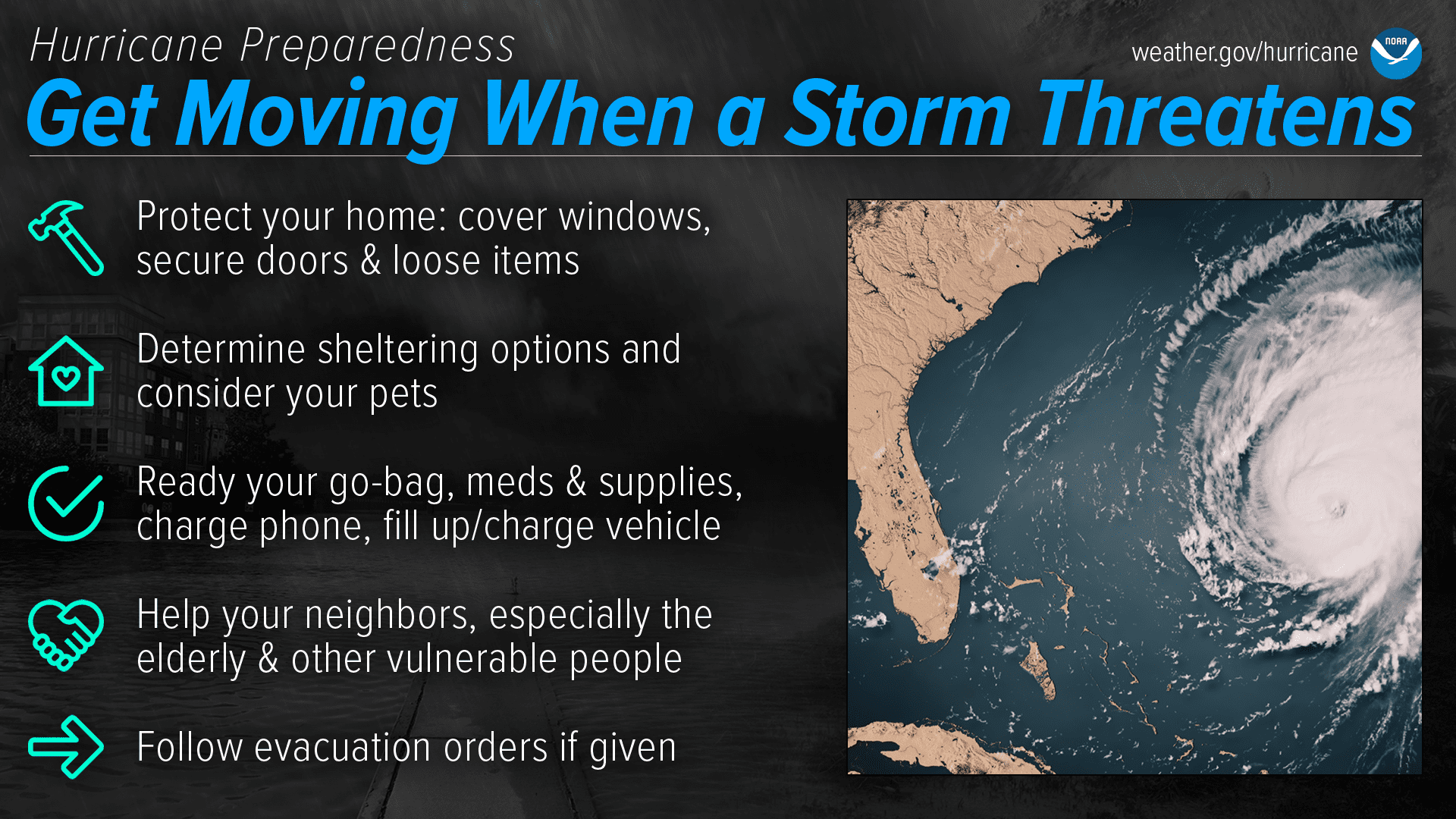
Residents of the U.S. Virgin Islands are all too familiar with the critical challenges associated with cyclones. Preparedness is especially important, because tropical systems can bring multiple hazards, including damaging winds, heavy rainfall, flooding, storm surge, rip currents, and hazardous marine conditions.
Additionally, serious perils can occur after a storm has passed, such as threats involving downed power lines, disruption of communications, loss of electricity and water, and limited access to basic necessities like food or healthcare.
Importantly, tropical storms and hurricanes can produce dangerous impacts even when a system does not make a direct landfall.
Hurricane Preparedness Tips
A previous Source article provided the following information regarding hurricane preparedness.
Before a Hurricane
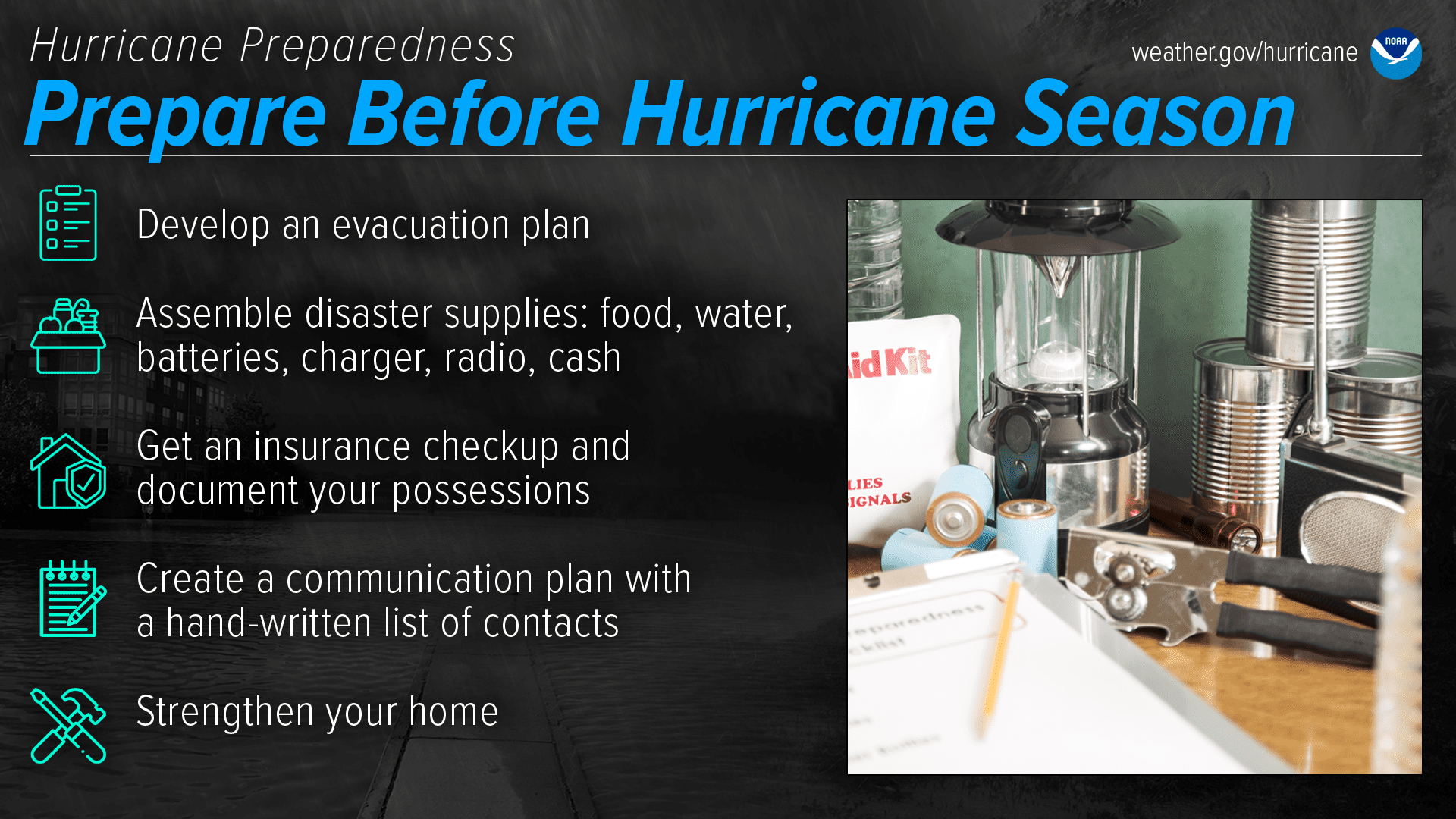
“The best time to prepare for hurricanes is before hurricane season begins,” NOAA said. “Avoid having to rush through potentially life-saving preparations by waiting until it’s too late. Get your disaster supplies while the shelves are still stocked, and get that insurance checkup early, as flood insurance requires a 30-day waiting period,” NOAA stated.
Tips to consider prior to a storm include:
- Compile a disaster kit, including flashlights, batteries, a first-aid kit, medications, food, and water.
- Create an evacuation plan. This can include flights off-island as well as verifying emergency shelter locations.
- Review insurance documents and ask questions to an insurance agent. Remember that “flood insurance” and “hurricane/wind insurance” policies can be very different.
- Assess your home and evaluate areas in need of reinforcement or repair.
- Become familiar with hurricane/tropical storm alerts and updates. Remember that emergency services may not be available during a storm.
During a Hurricane
“Be prepared for hurricane season by knowing what to do during a storm,” NOAA noted. “Whether you’ve evacuated or are sheltering in place, know what to expect from the hazards you may face. Remain vigilant, stay up-to-date with the latest forecasts and alerts, and continue to listen to local officials,” NOAA continued.
The following are tips to stay safe during a hurricane:
- Stay away from windows.
- Keep a radio and communication devices charged up and have extra batteries available.
- Be on guard against rising water. Flood waters can rise very quickly.
- Remain in a sheltered location such as an interior bathroom until the storm completely passes.
- Remember that if the eye of the storm passes over, the weather will temporarily improve. However, since the eye of the storm is at the center of the cyclone, it is just a matter of time before the other side of the hurricane moves over the area, the weather again deteriorates, and high winds return.
After a Hurricane
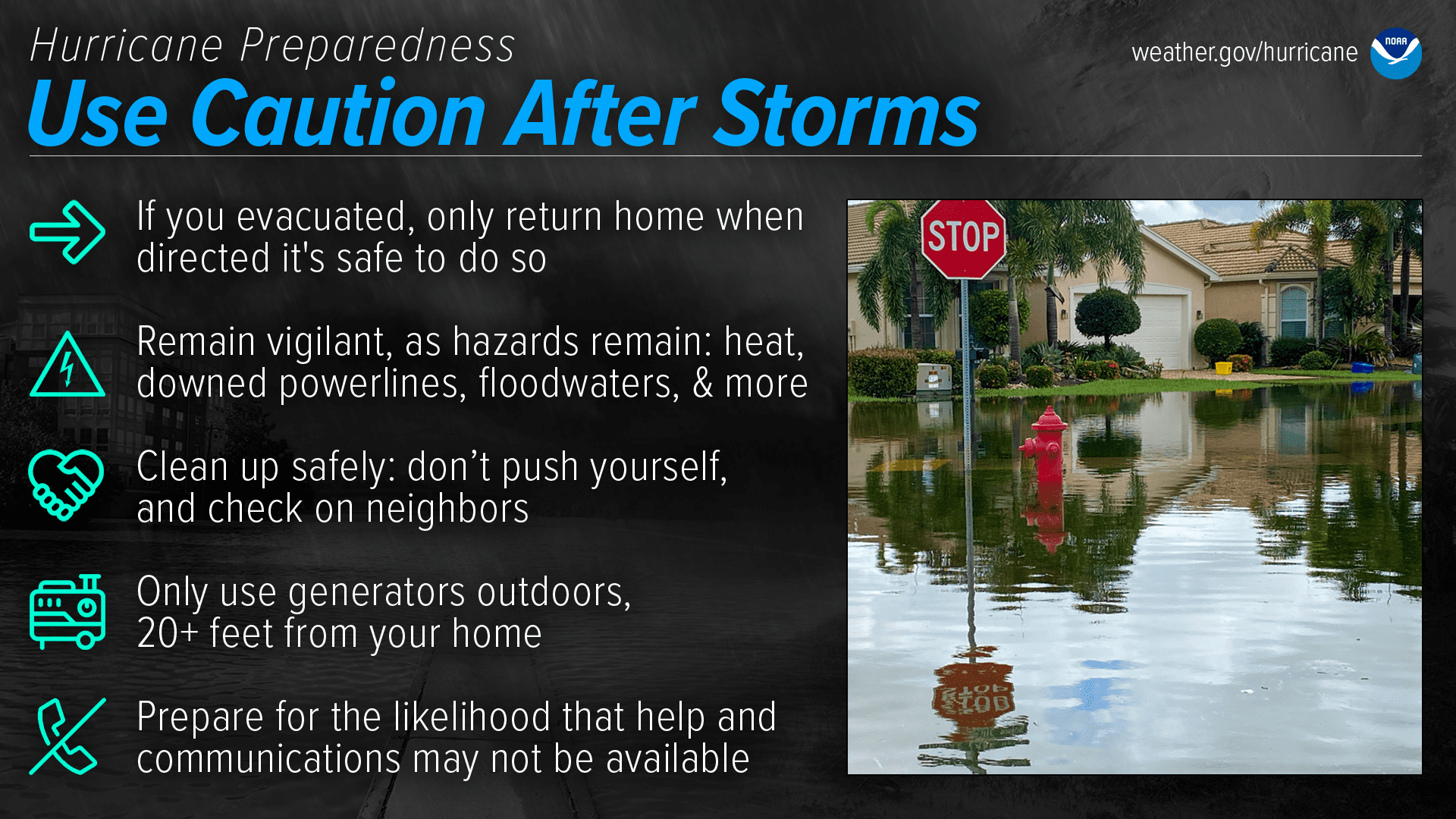
“A key part of hurricane preparedness is understanding the dangers that remain well after a storm, [and] this is not the time to put your guard down,” NOAA explained. “Nearly half of hurricane fatalities occur after the storm,” NOAA warned.
Safety reminders after a hurricane include:
- Be alert for hazards such as downed power lines or damaged structures.
- Ensure that generators are placed away from interior areas or spaces where toxic fumes could be inhaled.
- Only drink water if it is deemed safe to do so. Contamination is possible during storms.
- Connect with neighbors and fellow islanders and assess any needs for medical treatment. (Don’t forget about pets and animals, too!)
- Stay updated on the weather and news and monitor for future developments about severe weather or additional cyclone development in the region.
The Atlantic hurricane season officially runs from June 1 through Nov. 30. However, preparations should begin before a storm is named, rather than mobilizing when hurricane or tropical storm watches or warnings are issued by the National Hurricane Center and the National Weather Service.
Early Outlooks Point to a Possibly Quieter Season, But Risk Remains
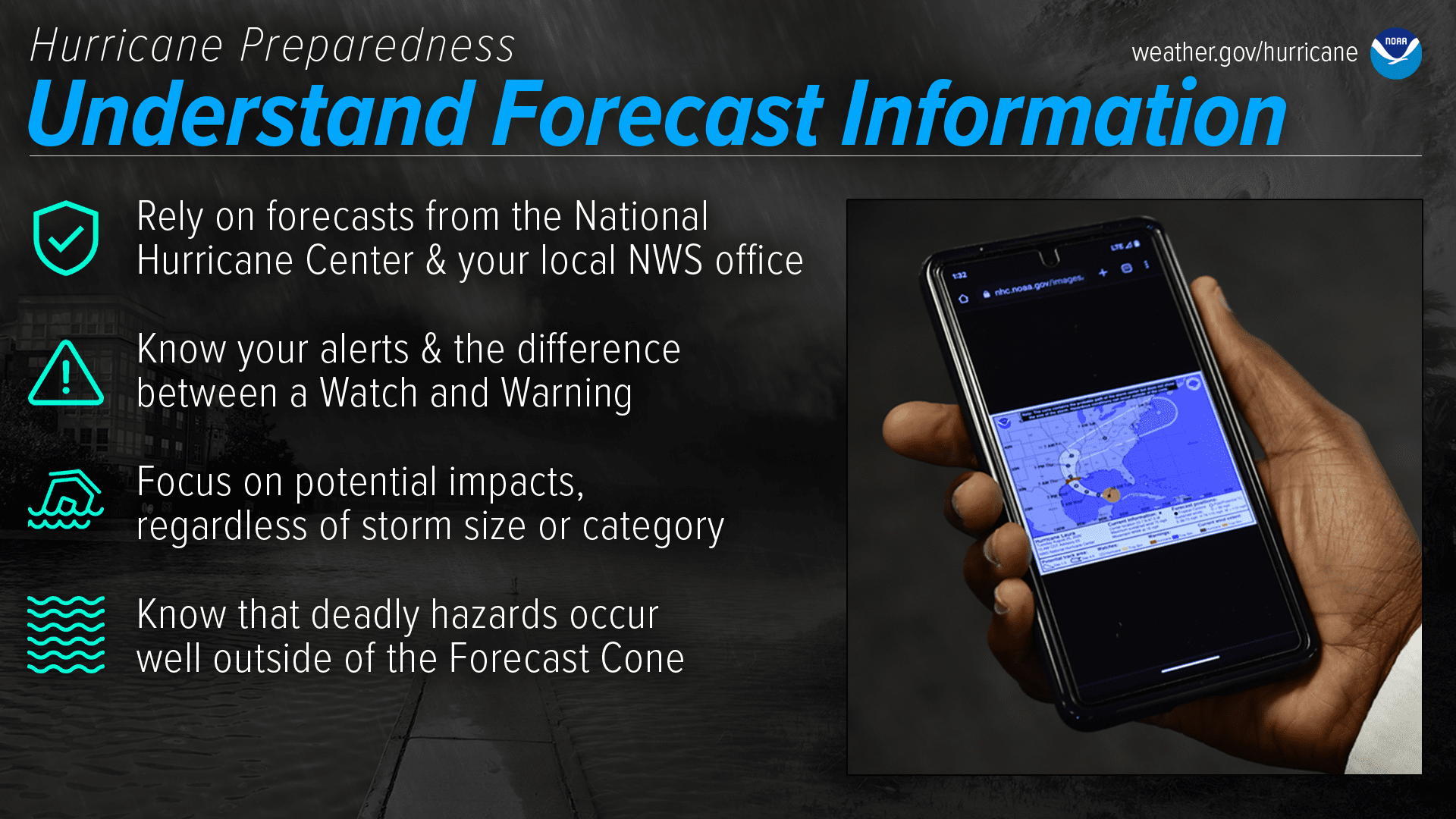
National Hurricane Preparedness Week comes as several early outlooks suggest the 2026 Atlantic hurricane season may be near or below average overall, due in large part to an expected developing El Niño weather pattern.
El Niño, which involves a warming of the equatorial Pacific Ocean, usually helps to increase wind shear—a change in wind direction and velocity with height in the atmosphere. In the Atlantic Ocean the increase in wind shear from El Niño helps to rip apart storms and prevent hurricane formation and intensification. This is the opposite of a La Niña cycle, when the ocean waters across the equatorial Pacific cool significantly. During La Niña, wind shear typically decreases in the Atlantic, and a reduction in wind shear can favor cyclone development.
As the Source previously reported, Colorado State University forecasts 13 named storms, including six hurricanes and two major hurricanes, and the Source also reported that AccuWeather has forecast a near-to below-historical average season, with 11 to 16 named storms, four to seven hurricanes, and two to four major hurricanes. However, forecasters noted that warm waters near the northeastern Caribbean could still support rapid intensification if storms pass close to the region.
Importantly, while an El Niño pattern can help to suppress overall activity in the Atlantic basin due to increased wind shear, an outcome of fewer storms is certainly not guaranteed. As is the case every season, it only takes one storm passing near a region to create serious impacts.
USVI Weather Updates
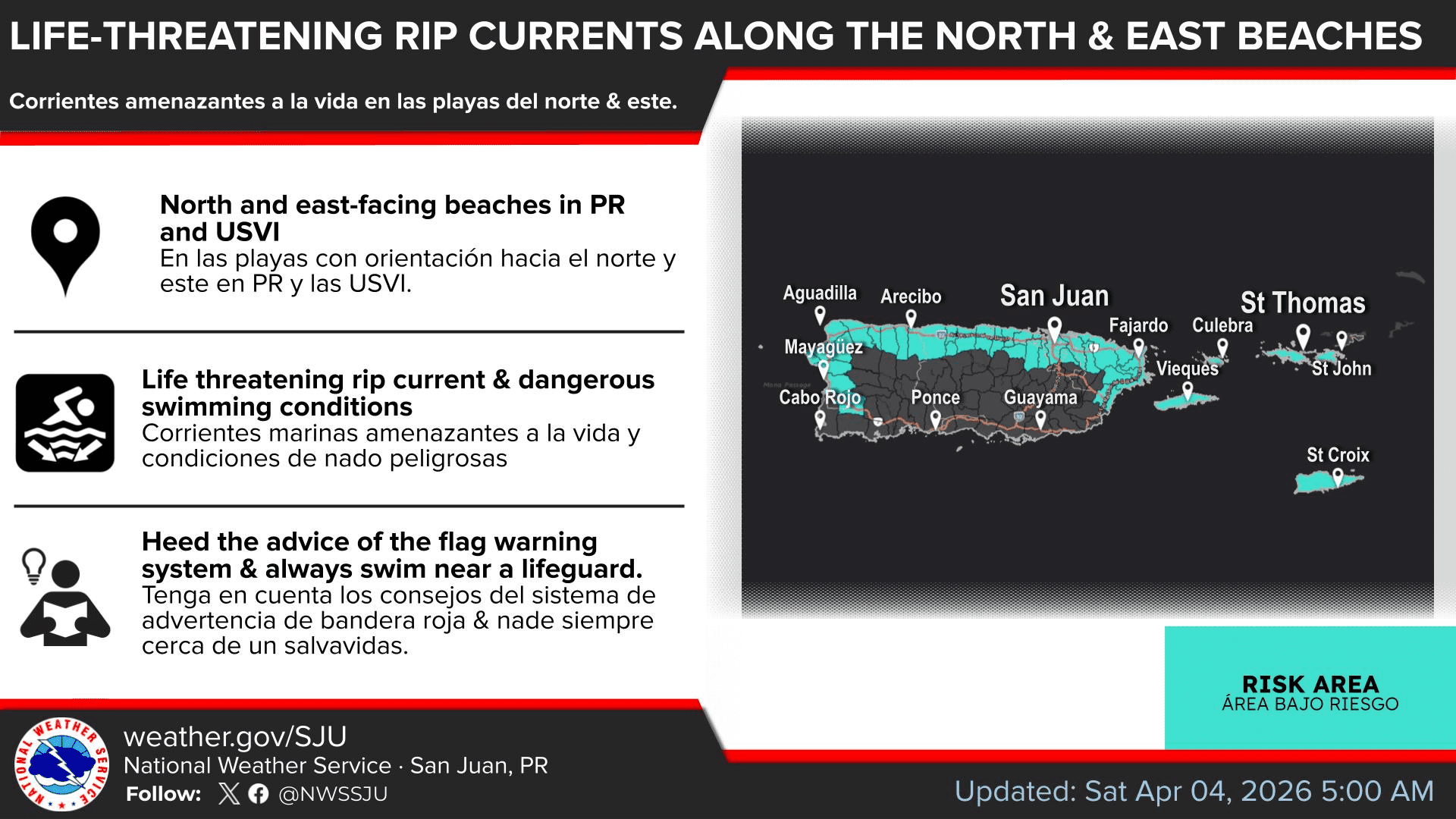
For the U.S. Virgin Islands and Puerto Rico, National Hurricane Preparedness Week is a reminder that preparation begins well before the first storm threatens the region. Even if the 2026 season is less active overall, residents are encouraged to review their plans now and remain prepared throughout the season.
NOAA is expected to release this year’s hurricane season predictions soon, and individuals will be able to locate the forecast on the administration’s official website. The NHC is also set to resume regular tropical updates for the Atlantic Basin starting on May 15.
In addition to weather information from the NWS and VITEMA, a daily weather forecast is also published on the Source Weather Page.