

As the 2025 Atlantic hurricane season approaches, National Hurricane Preparedness Week— observed May 4-10 — encourages residents of the U.S. Virgin Islands and other coastal areas to review safety plans, strengthen emergency kits and stay informed through official forecast sources.
The annual awareness campaign, led by the National Oceanic and Atmospheric Administration, aims to help individuals prepare before, during and after a Cyclone. The Atlantic hurricane season begins June 1 and runs through Nov. 30.
“Be ready for hurricane season, and take action today to be better prepared for when the worst happens,” NOAA explained on its official Hurricane Preparedness website. “Understand your risk from hurricanes, and begin preseason preparations now,” NOAA said. “Make sure you have multiple ways of receiving forecasts and alerts, and know what to do before, during, and after a storm.”
Each day between May 4 and May 10, NOAA plans to share information and infographics about specific tips individuals can take to prepare, including how to interpret forecasts and alerts and what to include in an emergency supply kit. The public is encouraged to participate and share the messages.

“Please help the National Weather Service spread the word about Hurricane Preparedness Week on social media,” the NWS said. “Everyone is welcome to use the text and images provided to help the NWS build a Weather-Ready Nation,” the NWS said.
Preparations Across the USVI
The following information, which was shared during a recent Source interview with Jamie Rhome, deputy director of the National Hurricane Center, outlined the potential threats residents and visitors in the U.S. Virgin Islands may face during a cyclone.
Regarding hurricane preparedness, Rhome emphasized the importance of being ready ahead of hurricane season and preparing for the possibility of extended electrical outages.
“Power outages are becoming an increasing challenge during and after hurricanes,” Rhome said. “Losing power in the Caribbean during a passing hurricane is certainly not news, but what we’re seeing are more situations happening because of the power outages [and dealing with] oppressive heat in the days after a hurricane has passed and without air conditioning or fans that rely on power,” Rhome stated.
“We’re seeing more people succumb to heat-related illnesses, including heat stroke,” he acknowledged. “We’re also seeing situations where people are lacking easy access to health care, or the loss of power is making it harder for them to take care of themselves, or an individual may be utilizing a respirator, or a diabetic individual may need to keep their insulin cool,” he said. “There is a myriad cascading issues that come from the absence of power, and the NHC encourages individuals to think about what they would do to take care of themselves and their families for not just one day without power, but possibly for a week or even two weeks from a major hurricane.”
Rhome said that one of the most important steps to take to prepare for hurricane season is to assemble an emergency supply kit and take additional preparedness steps, including making a plan for communication with family and friends, particularly if communications are unavailable after a storm.
Additionally, Daryl Jaschen, director of the Virgin Islands Territorial Emergency Management Agency, told the Source that the organization will collaborate with the Federal Emergency Management Agency to help share information about Hurricane Preparedness Week across the territory.
“VITEMA and FEMA will be doing a joint press release and will be preparing several radio Public Service Announcements during National Hurricane Preparedness Week,” Jaschen noted.
Hurricane Preparedness Tips
A previous Source article provided the following information regarding hurricane preparedness:
Before a Hurricane
“The best time to prepare for hurricanes is before hurricane season begins,” NOAA said. “Avoid having to rush through potentially lifesaving preparations by waiting until it’s too late. Get your disaster supplies while the shelves are still stocked, and get that insurance checkup early, as flood insurance requires a 30-day waiting period,” NOAA stated.
Tips to consider prior to a storm include:
- Compile a disaster kit, including flashlights, batteries, a first-aid kit, medications, food, and water.
- Create an evacuation plan. This can include flights off-island as well as verifying emergency shelter locations.
- Review insurance documents and ask questions to an insurance agent. Remember that “flood insurance” and “hurricane/wind insurance” policies can be very different.
- Assess your home and evaluate areas in need of reinforcement or repair.
- Become familiar with hurricane/tropical storm alerts and updates. Remember that emergency services may not be available during a storm.
During a Hurricane
“Be prepared for hurricane season by knowing what to do during a storm,” NOAA noted. “Whether you’ve evacuated or are sheltering in place, know what to expect from the hazards you may face. Remain vigilant, stay up to date with the latest forecasts and alerts, and continue to listen to local officials,” NOAA continued.
The following are tips to stay safe during a hurricane:
- Stay away from windows.
- Keep a radio and communication device charged up and have extra batteries available.
- Be on guard against rising water. Floodwaters can rise very quickly.
- Remain in a sheltered location such as an interior bathroom until the storm completely passes.
- Remember that if the eye of the storm passes over, the weather will temporarily improve. However, since the eye of the storm is at the center of the Cyclone, it is just a matter of time before the other side of the hurricane moves over the area, the weather again deteriorates, and high winds return.
After a Hurricane
“A key part of hurricane preparedness is understanding the dangers that remain well after a storm, and this is not the time to put your guard down,” NOAA explained. “Nearly half of hurricane fatalities occur after the storm,” NOAA warned.
Safety reminders after a hurricane include:
- Be alert for hazards such as downed power lines or damaged structures.
- Ensure that generators are placed away from interior areas or spaces where toxic fumes could be inhaled.
- Only drink water if it is deemed safe to do so. Contamination is possible during storms.
- Connect with neighbors and fellow islanders and assess any needs for medical treatment. (Don’t forget about pets and animals, too!)
- Stay updated on the weather and news and monitor for future developments about severe weather or additional Cyclone development in the region.
USVI Weather Updates
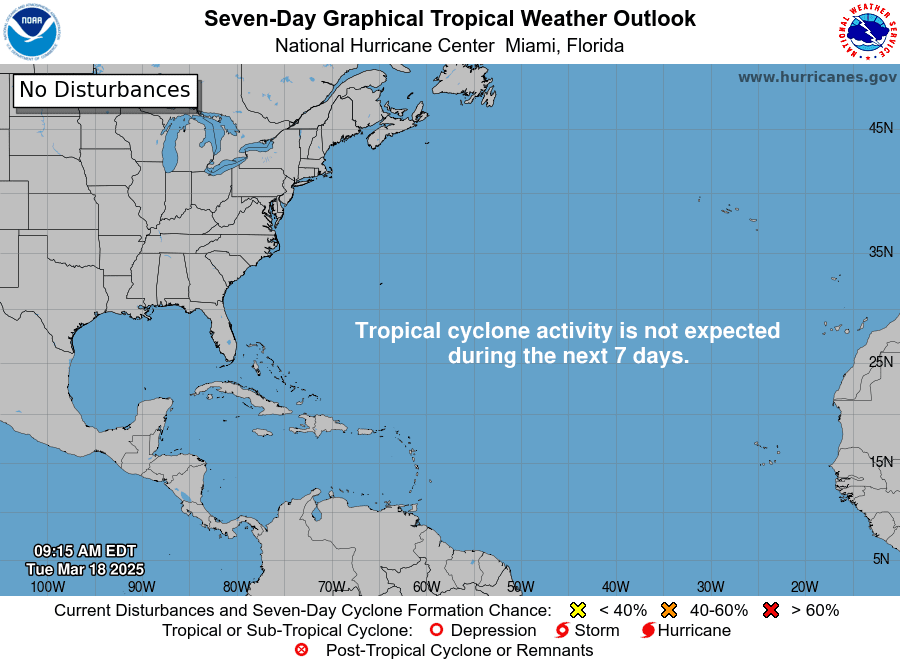
NOAA plans to release this year’s hurricane season predictions in May, and individuals will be able to locate the forecast on the administration’s official website. The NHC is also set to resume regular tropical updates for the Atlantic Basin starting on May 15.
In addition to weather information from the NWS and VITEMA, a daily weather forecast is also published on the Source Weather Page, where readers can view weather forecast videos and disaster preparedness video segments.