



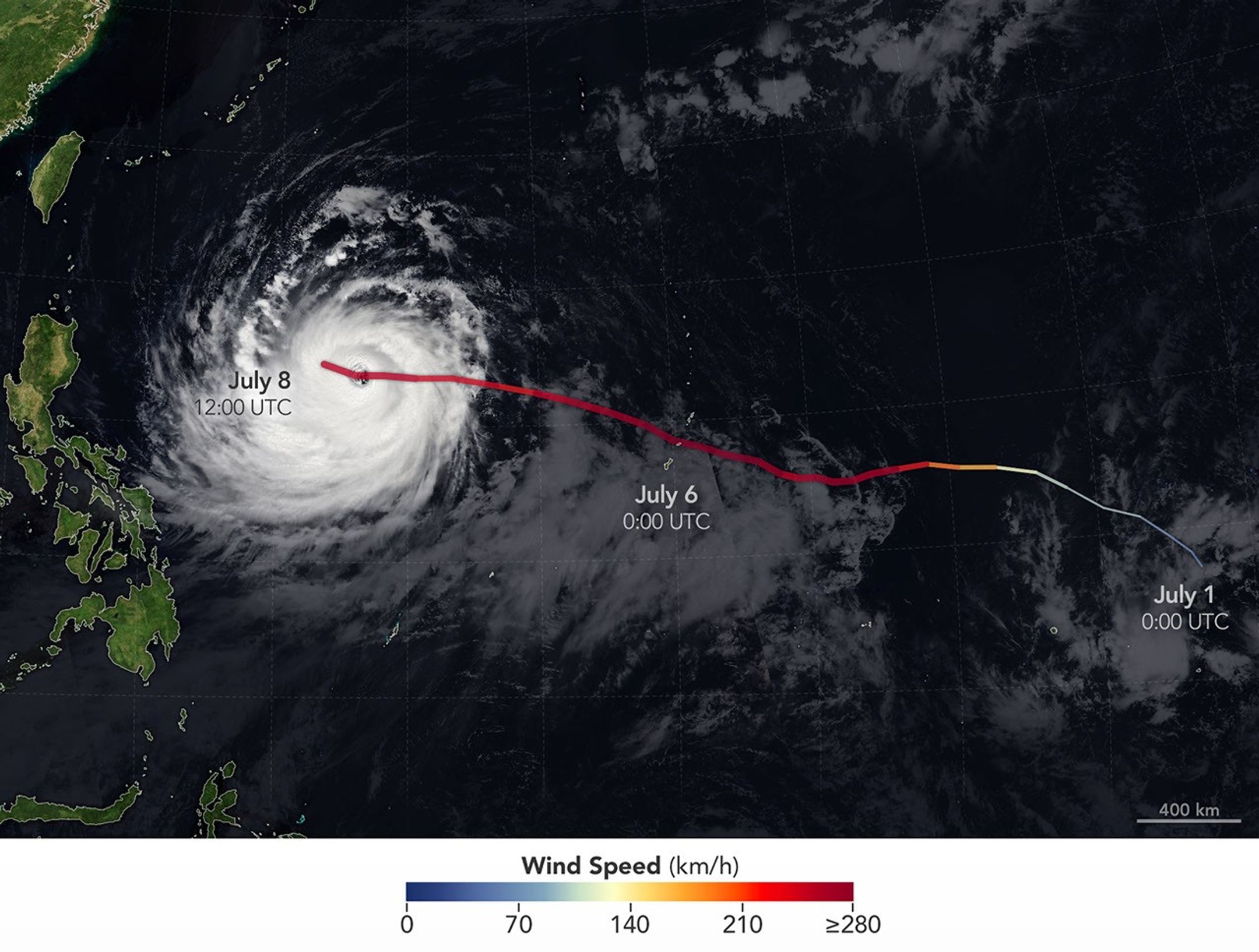
Just months after Super Typhoon Sinlaku left parts of Guam and the Commonwealth of the Northern Mariana Islands facing a long recovery, another major tropical cyclone has struck the Western Pacific region, again underscoring the unique disaster challenges facing U.S. territories.
Super Typhoon Bavi made a direct pass over Rota, an island in the CNMI about 40 miles north of Guam. Bavi’s intensity, with sustained winds of about 180 mph, was equivalent to a Category 5 hurricane on the Saffir-Simpson Hurricane Wind Scale.
Bavi Brings Devastating Hit to Rota
The Source connected with Marcus Landon Aydlett, warning coordination meteorologist at the National Weather Service office in Guam, to learn more details about the storm and the recovery efforts. The NWS office serves Guam and the Northern Mariana Islands.
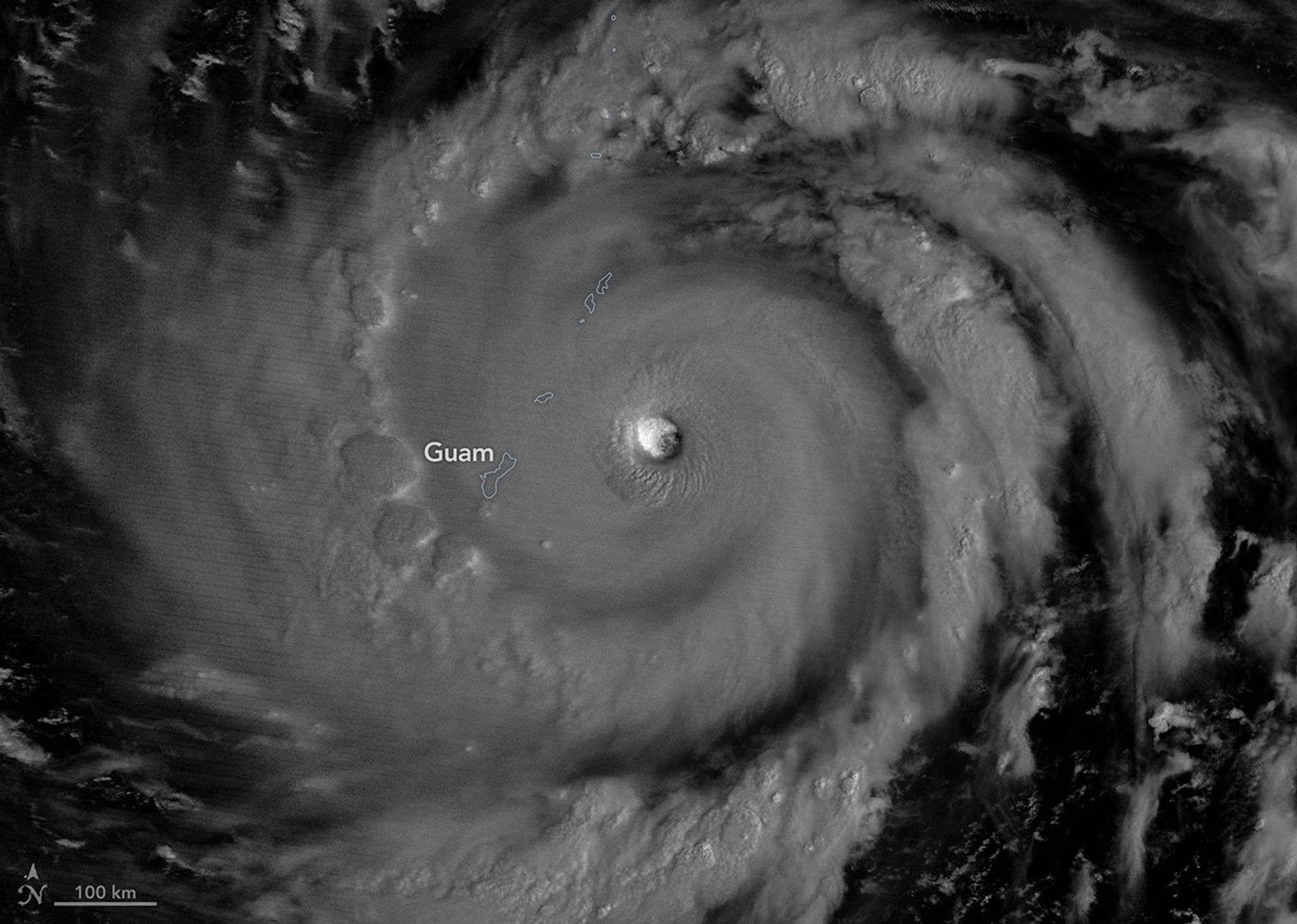
The conversation came only months after the Source first spoke with Aydlett about recovery efforts following Super Typhoon Sinlaku. Aydlett told the Source that Bavi developed in eastern Micronesia near the Marshall Islands before tracking generally west-northwest toward the Mariana Islands. As it approached, the storm underwent extreme rapid intensification.

“The cyclone quickly became a super typhoon – which is equivalent to a Category 5 hurricane – on its approach and continued to strengthen further,” Aydlett said.
The typhoon intensified at an extraordinary rate, declared Aydlett, strengthening from tropical storm strength to a Category 4 in roughly one day.
“Every six hours, we were provided with a new forecast update, and every six hours it had strengthened another category,” Aydlett explained. “Rapid intensification is defined as a storm which experiences an increase in maximum sustained winds by at least 30 knots in 24 hours. We saw upwards of 75 knots in a 24-hour period, which is incredible.”
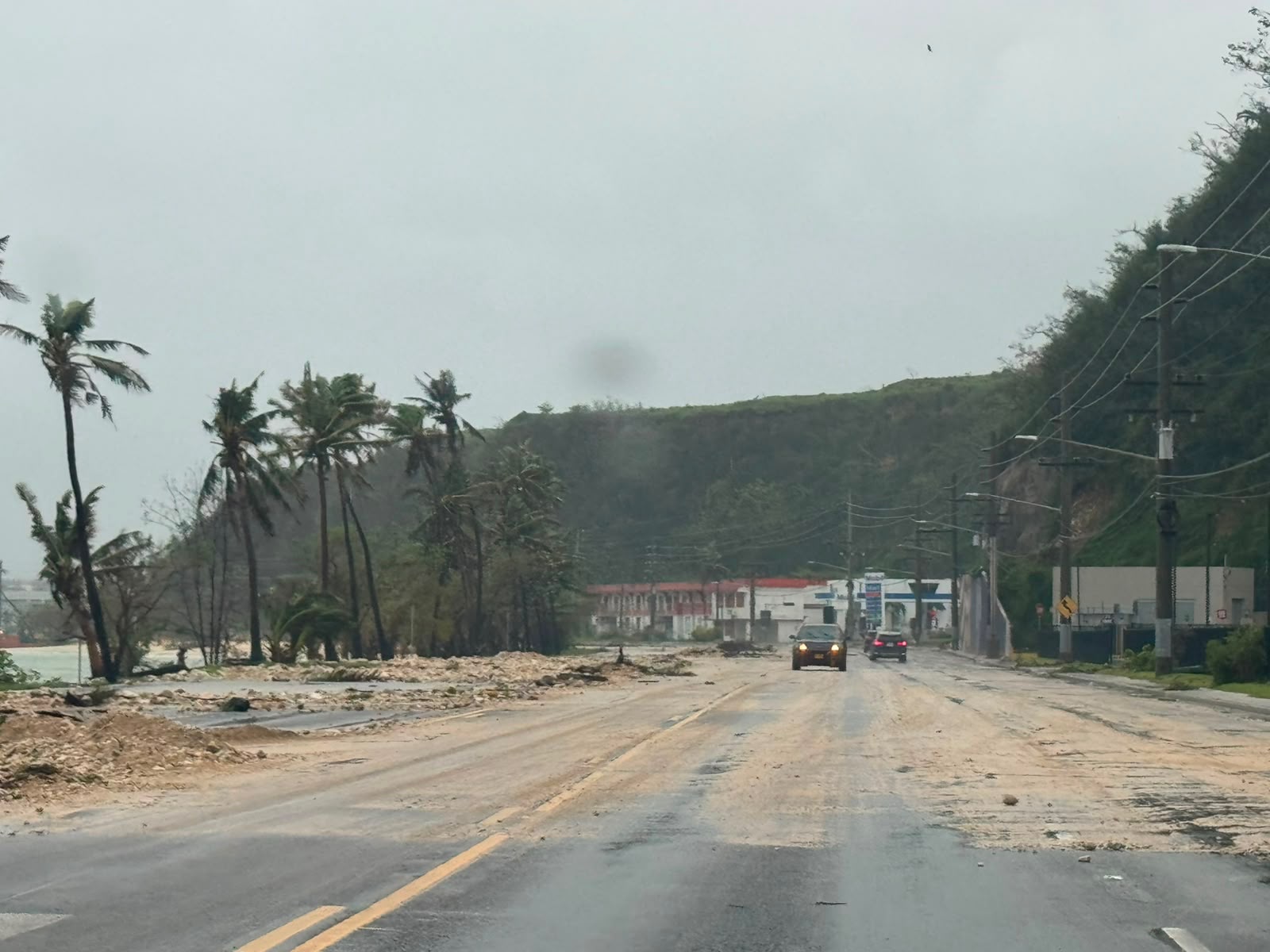
Aydlett said Guam missed the worst of the typhoon, but Rota suffered a catastrophic direct impact.
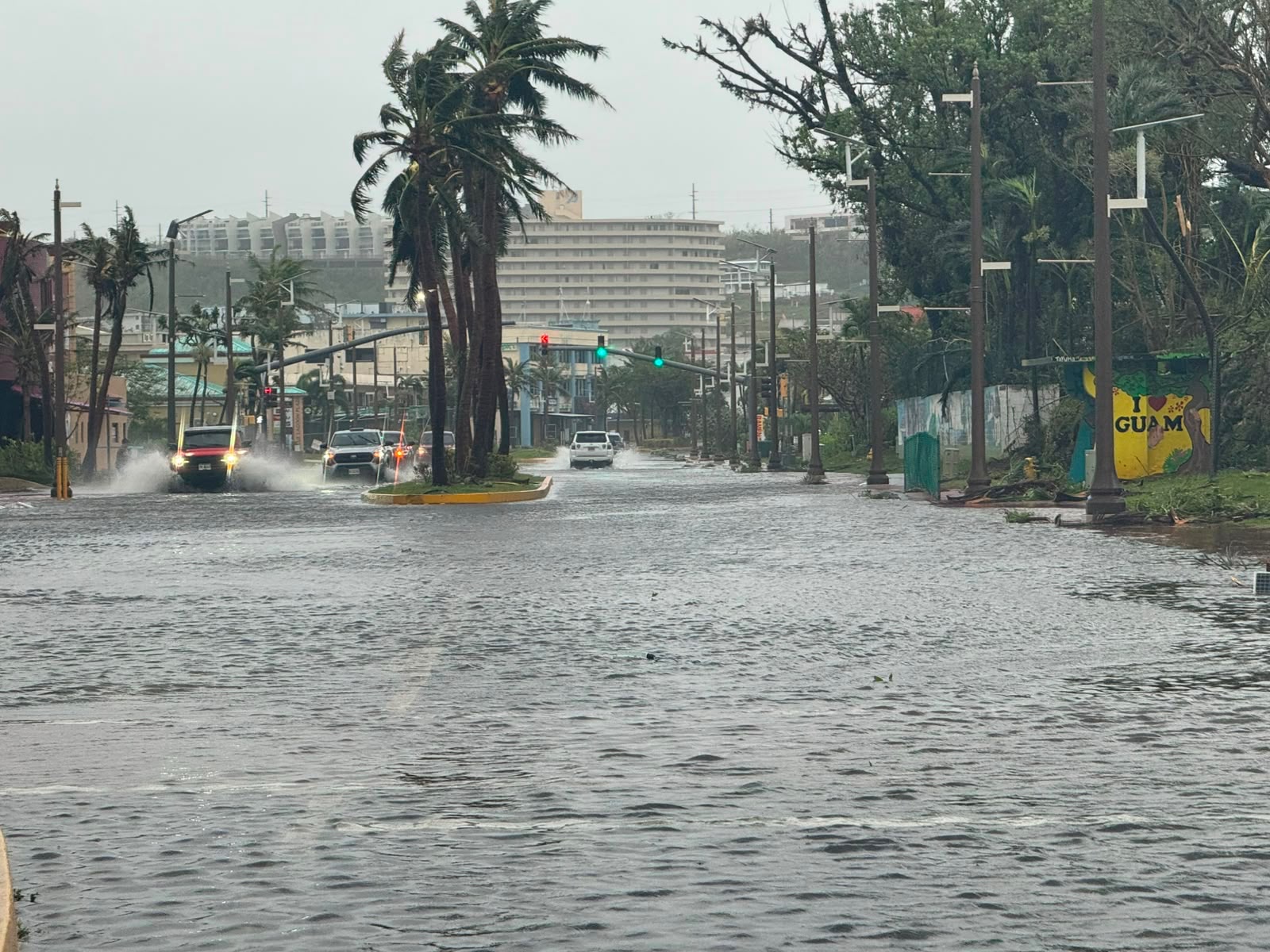
“Unfortunately, Bavi made a direct passage right over the island of Rota,” Aydlett noted. “Guam just missed the worst of this super typhoon, but Rota took a hit with 180-mile-per-hour sustained Category 5 super typhoon winds,” Aydlett said. “They were devastated,” he acknowledged.
El Niño May Have Helped Shape Bavi’s Path
Aydlett also explained that El Niño may have played a role in where Bavi developed and how much time it had to strengthen before reaching the Mariana Islands.
As forecasters have predicted for months, a strengthening El Niño pattern is expected to help limit tropical cyclone development across the Atlantic basin by increasing wind shear across the region. However, wind shear typically decreases across the Pacific Ocean during an El Niño, creating conditions that can be more conducive for tropical cyclogenesis in the Pacific.
Indeed, during El Niño years, tropical cyclones in the Western Pacific can form farther east, closer to the Marshall Islands and the international date line, before tracking westward toward Guam and the CNMI, Aydlett noted.
“The storm’s origin region was farther to the east – typical with El Niño years,” Aydlett stated, explaining that warmer waters across the tropical central Pacific can allow tropical cyclones to develop farther from the islands and strengthen as they move west.
That longer stretch of warm ocean can give storms more time to intensify before reaching the region.
Recovery Interrupted After Sinlaku
Bavi arrived only about three months after Sinlaku damaged Guam and the CNMI between April 13 and 15. As the Source recently reported, Sinlaku caused major damage in the region and highlighted how recovery in island territories can be slower and more complicated. Supplies, crews and emergency resources often must be flown in rather than driven from neighboring states.
Aydlett said Bavi complicated recovery efforts that were already underway, particularly on the islands of Tinian and Saipan in the CNMI, where crews were still working to restore services after Sinlaku.
“Much of the island of Tinian was still without power after Sinlaku hit,” Aydlett said. “I think the entire power plant needs to be rebuilt or replaced.”
Recovery crews, including military personnel, had been working to repair damage after Sinlaku, when Bavi’s approach forced a shift from rebuilding to preparing for another major storm, according to Aydlett.
“They’ve been very diligent, aggressively working in Tinian and Saipan to get things up and running,” Aydlett noted. “But repair efforts had to transition into preparedness efforts with Bavi’s approach.”
That meant some residents were still dealing with the impacts of one disaster while another major storm arrived.
“People on Saipan and Tinian, still without power and still living in shelters, had to hunker down with their emergency situation still ongoing,” Aydlett said.
While Rota was not dealing with the same level of lingering damage from Sinlaku, Aydlett indicated that Bavi dealt the island a severe blow.
“Rota took a glancing blow from Sinlaku, so they weren’t dealing with too many residual effects from Sinlaku, but Bavi dealt them a heavy, heavy blow that’s going to take a very long time to recover from,” Aydlett stated.
Island Logistics Add to Recovery Challenges
Aydlett said one of the challenges after Bavi is simply getting enough people and resources to the hardest-hit areas. Rota is a small island with limited lodging and damaged infrastructure, complicating the response.
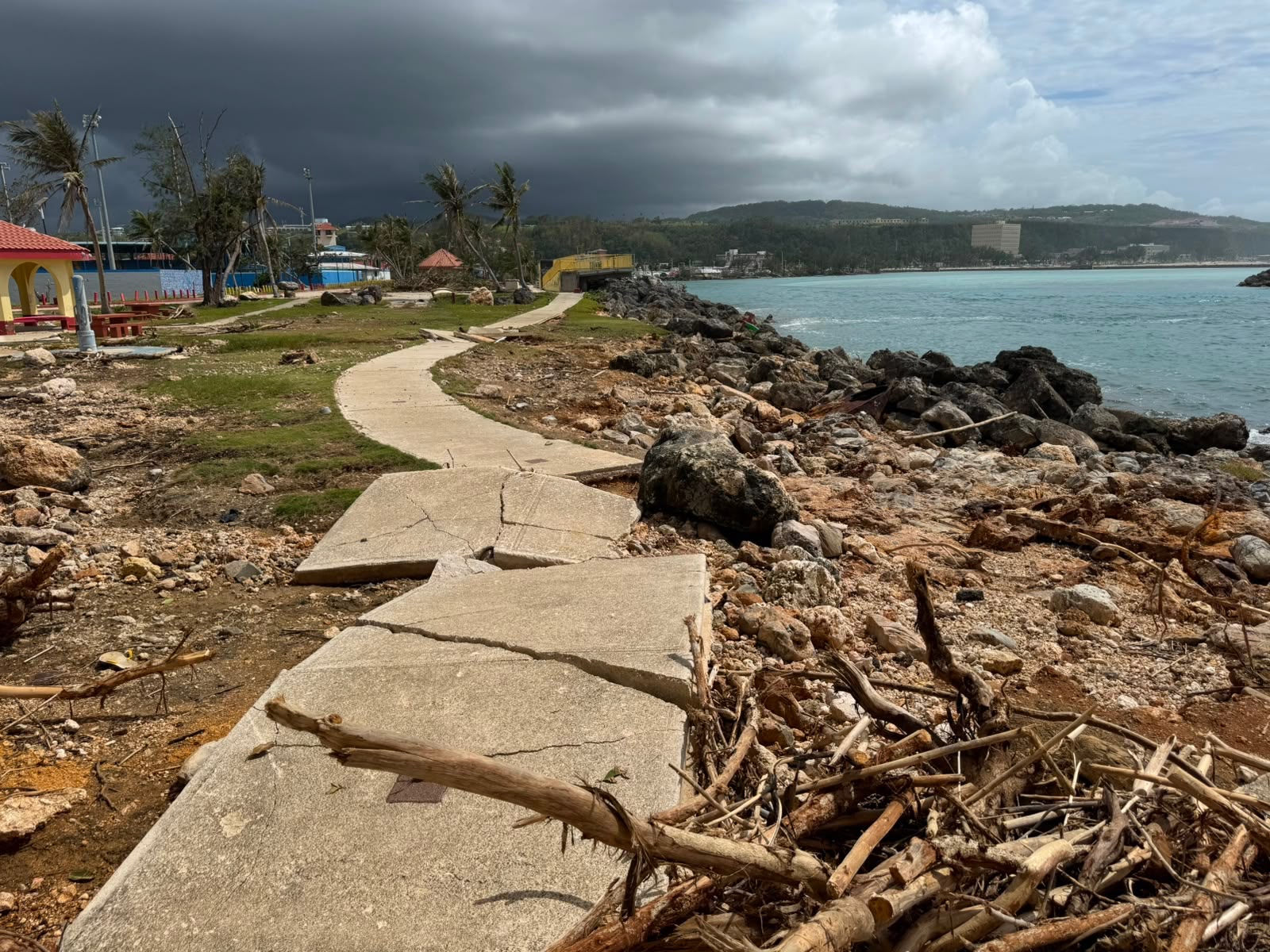
“There are limited lodging capabilities and very few motels in the first place,” Aydlett explained. “But other areas also took significant damage, including the restaurants. Some of them were fully destroyed.”
For readers in the U.S. Virgin Islands, where back-to-back hurricanes Irma and Maria caused disastrous damage in 2017, the situation may sound familiar. Island communities can be well prepared and still face long, difficult recoveries because of geography, supply chains, fragile infrastructure, and limited backup systems.
Aydlett emphasized that the region has learned to prepare aggressively, because response resources can become stretched after a major disaster.
“When a disaster strikes, you have to bounce back, and sooner the better,” Aydlett said. “We have to be able to bounce back because you never know when the next disaster may strike,” he added.
Aydlett’s message was clear: for island territories, recovery is rarely fast, even when help is already on the way.
“Be self-sustaining for at least seven days, because our response capabilities and resources may become stretched and limited,” Aydlett advised.
Despite the extreme damage on Rota, Aydlett said that shortly after the storm passed, local officials told him there were no known casualties.
FEMA, Red Cross Respond Across the Region
The recovery effort now includes multiple layers of response. Aydlett said FEMA had already been present in Saipan and Tinian after Sinlaku and had forward-deployed additional personnel before Bavi arrived. He said the American Red Cross also remains active across the region.
“We have two different efforts going on with FEMA: focused on Sinlaku recovery efforts, but then also the Bavi response efforts,” Aydlett said.
For those in the Virgin Islands, other territories, or the mainland who want to help, Aydlett urged people to support trusted organizations rather than sending money through unverified online fundraisers.
“A tried-and-true, tested organization would be the American Red Cross,” Aydlett suggested. “Reach out to them. People can see how they can assist through time and volunteer efforts or by donations.”
Supplies Remain Limited on Hard-Hit Islands
Aydlett said Guam’s supplies were generally in fair shape after Bavi, though some fresh foods and generators were difficult to find. Conditions on Rota, Tinian, and Saipan were more challenging.
“It’s a different story up in Rota, Tinian, and Saipan, where the supplies are much more limited,” Aydlett pointed out. “Especially where they’ve been really dealing with back-to-back events.”
He said demand for generators has also remained high.
A Reminder for the Atlantic Basin
The lesson for all territories is clear: prepare early, recover quickly when possible, and recognize that island communities often face challenges that differ from the mainland.
For readers in the U.S. Virgin Islands and across the Caribbean in particular, the immense challenges following Super Typhoon Sinlaku and Bavi are a reminder that island communities can face long recovery periods. With the 2026 Atlantic hurricane season running through Nov. 30, it is crucial to review emergency plans, check supplies, and be prepared before the next threat develops.
As of Wednesday afternoon, the National Hurricane Center was monitoring two areas across the Atlantic basin, both currently with a low chance of tropical development.
The local weather forecast for the U.S. Virgin Islands is regularly updated on the Source Weather Page. Individuals can also find helpful weather information, emergency preparedness, and alerts from the Virgin Islands Territorial Emergency Management Agency.