Drought conditions persist across the U.S. Virgin Islands and Puerto Rico, where prolonged dry weather has stressed vegetation and placed increasing strain on farms and household water supplies. Although rain chances may increase in the coming days, longer-range forecasts suggest below-normal rainfall could continue into the fall.
Details regarding the current drought status were included in a report released Thursday by the National Integrated Drought Information System, the National Oceanic and Atmospheric Administration, and numerous partners, including the U.S. Department of Agriculture and the University of the Virgin Islands.
Extreme Drought Persists Across Territory
The drought update said that conditions across both U.S. territories deteriorated significantly over the past several months.
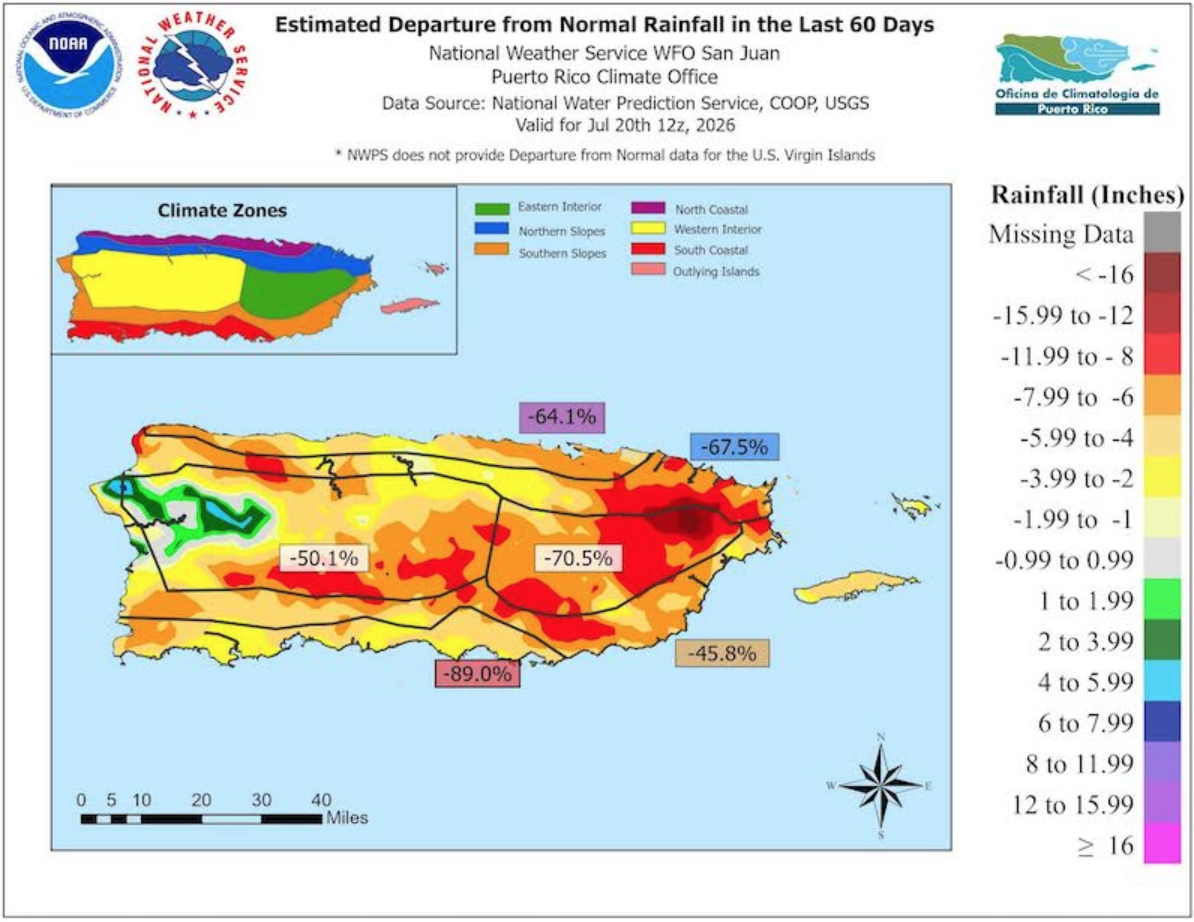
“Following a wetter-than-normal late winter and early spring, conditions across the U.S. Caribbean dried significantly throughout May, June, and July,” the report said. “The region is experiencing near-record warmth and dryness, which has triggered grass fires and critically low stream levels. Depleting water supplies in major reservoirs and underground wells are causing significant economic losses across the agricultural sector.”
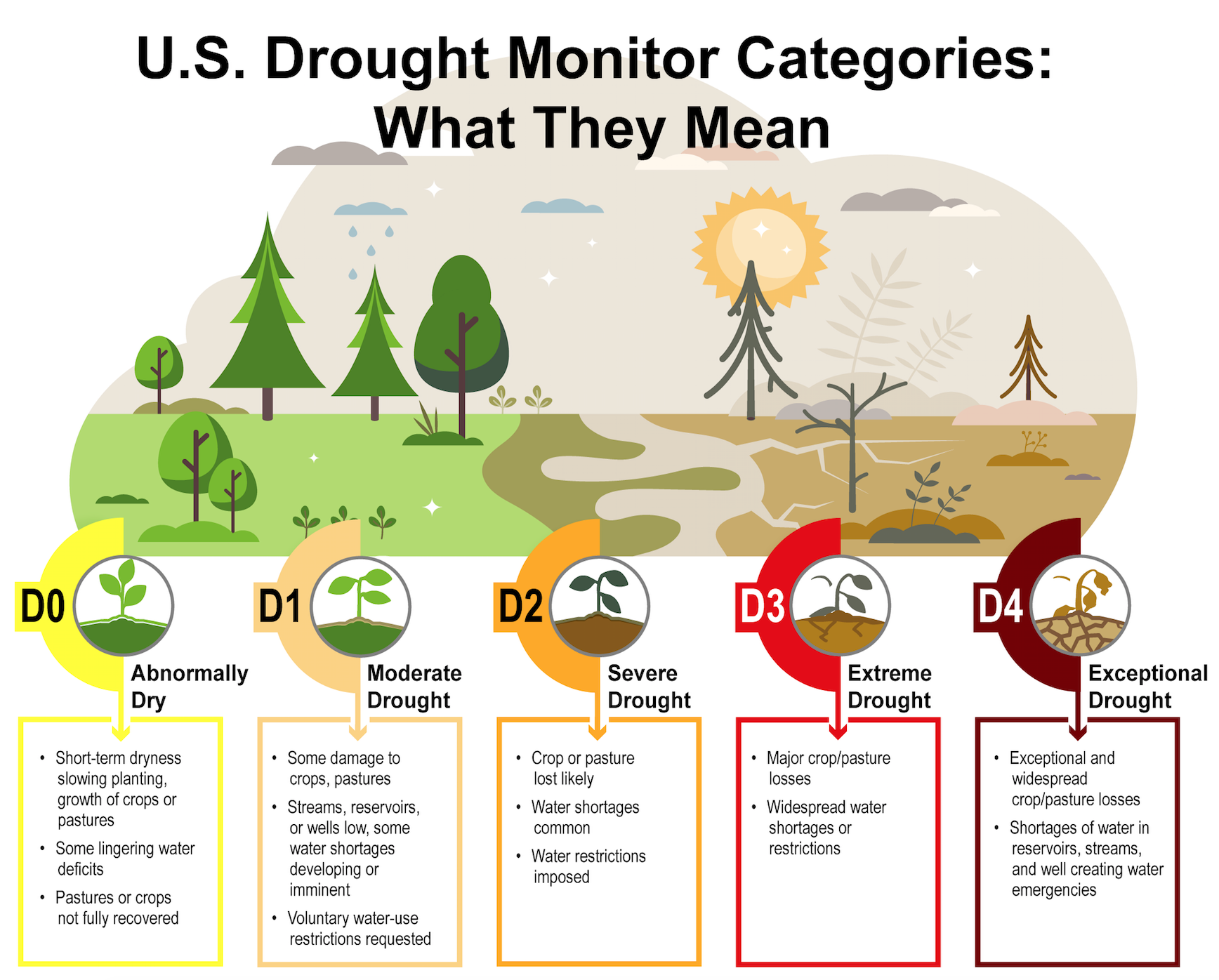
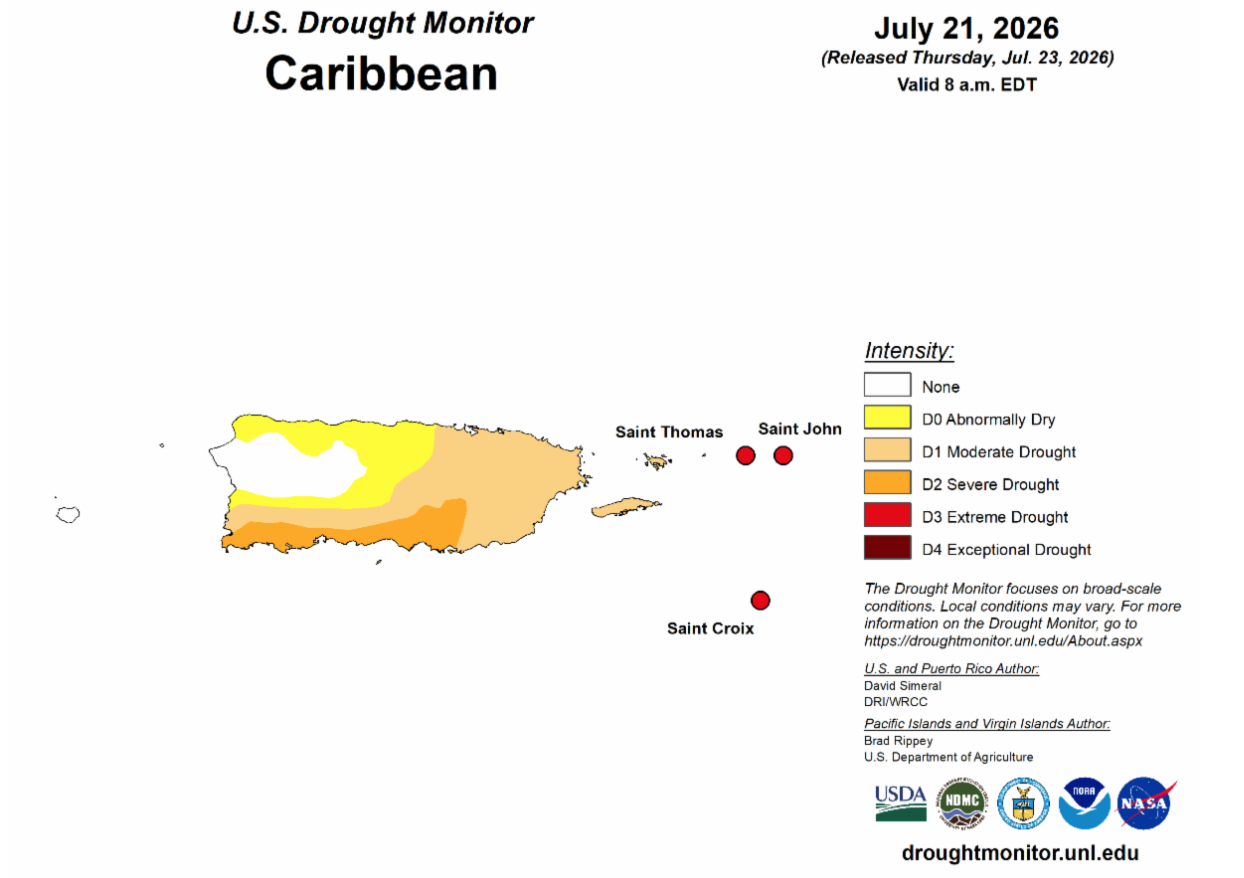
According to the report, the U.S. Virgin Islands remain under an extreme drought classification (D3), the second-highest drought category used by the U.S. Drought Monitor. Severe drought (D2) continues across the southern plains of Puerto Rico, while moderate drought (D1) and abnormally dry (D0) conditions cover other portions of the island.
The report emphasized the visible effects of the prolonged dry weather across the territory.
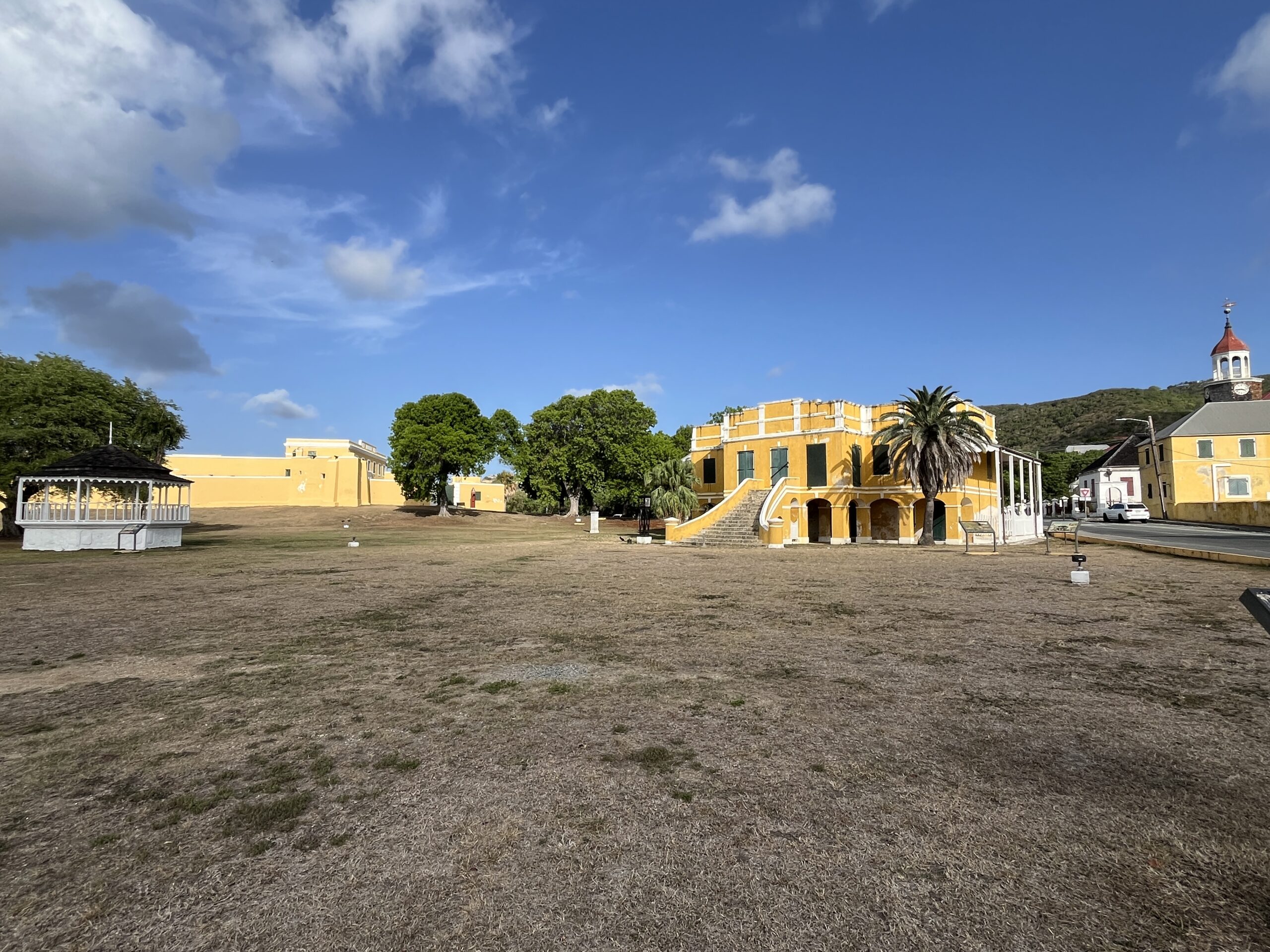
“Vegetation shows clear signs of stress,” the update said, adding that “There is not enough water for residents to fill their cisterns.”
Record or near-record warmth and dryness have also affected the region.
“San Juan, Puerto Rico, is experiencing their driest July on record and fourth warmest on record, and Juncos, Puerto Rico, is experiencing their second driest and warmest July on record,” according to the update.
“Across the U.S. Virgin Islands, both Henry E. Rohlsen Airport on St. Croix and Cyril E. King Airport on St. Thomas recorded their driest June on record. This period also marks the second driest May–July for the islands since record keeping began in the early 1950s,” the report stated.
Farmers Face Increasing Challenges
The NOAA update detailed growing agricultural impacts across St. Croix, St. Thomas, and St. John.
According to the report, worsening drought is affecting farms across the territory, with depleted ponds, limited access to water and animal feed, and rising production costs. The specific challenges vary across St. Croix, St. Thomas, and St. John.
“On St. Thomas, livestock and poultry farmers face limited feed access due to dying Guinea grass. Groundwater levels are not improving, and water access for agricultural needs remains limited despite filling the fairgrounds cistern with a 2,000-gallon water truck,” the report indicated.
“On St. John, farmers are preparing land for future crops while monitoring bananas for fungus. Ongoing erosion continues to render some roads impassable.
“Meanwhile, on St. Croix, limited rainfall has depleted ponds, driving up production costs. Farmers are actively implementing risk-reduction measures, including land preparation, fencing, and irrigation. Livestock producers are rotating animals and culling herds. Poultry farmers report that high water and feed costs are reducing profits, leading to a temporary pause in procuring new chicks until cooler weather and the return of natural grasses,” the report described.
The report also noted that in Puerto Rico, declining surface and groundwater levels have resulted in water rationing for agricultural users in the south-central and southwest, as well as for some residents in the northeast. More than 300 brush fires were reported in July amid worsening soil dryness and severe vegetation stress along the southern coast.
Rain Chances May Increase
Despite the concerning drought conditions, the National Weather Service in San Juan, Puerto Rico, said a wetter and more unstable weather pattern could develop across the region.
“A weak tropical wave is expected to bring brief showers on Friday, while another one could bring more showers from late Sunday into early next week,” the NWS said Thursday.
The NWS noted that the threat of flooding may become elevated Sunday, with the possibility of localized flooding on Monday and Tuesday.
“The flood threat will be elevated on Sunday, with the potential for flooding in urban areas, roads, and small streams,” the NWS said. “From Monday through Tuesday, the flood threat will be limited, with ponding of water on roads and in poorly drained areas being the primary concern.”
Still, it remains uncertain whether the anticipated rainfall will be widespread or substantial enough to provide meaningful drought relief.
Dry Conditions Likely to Continue
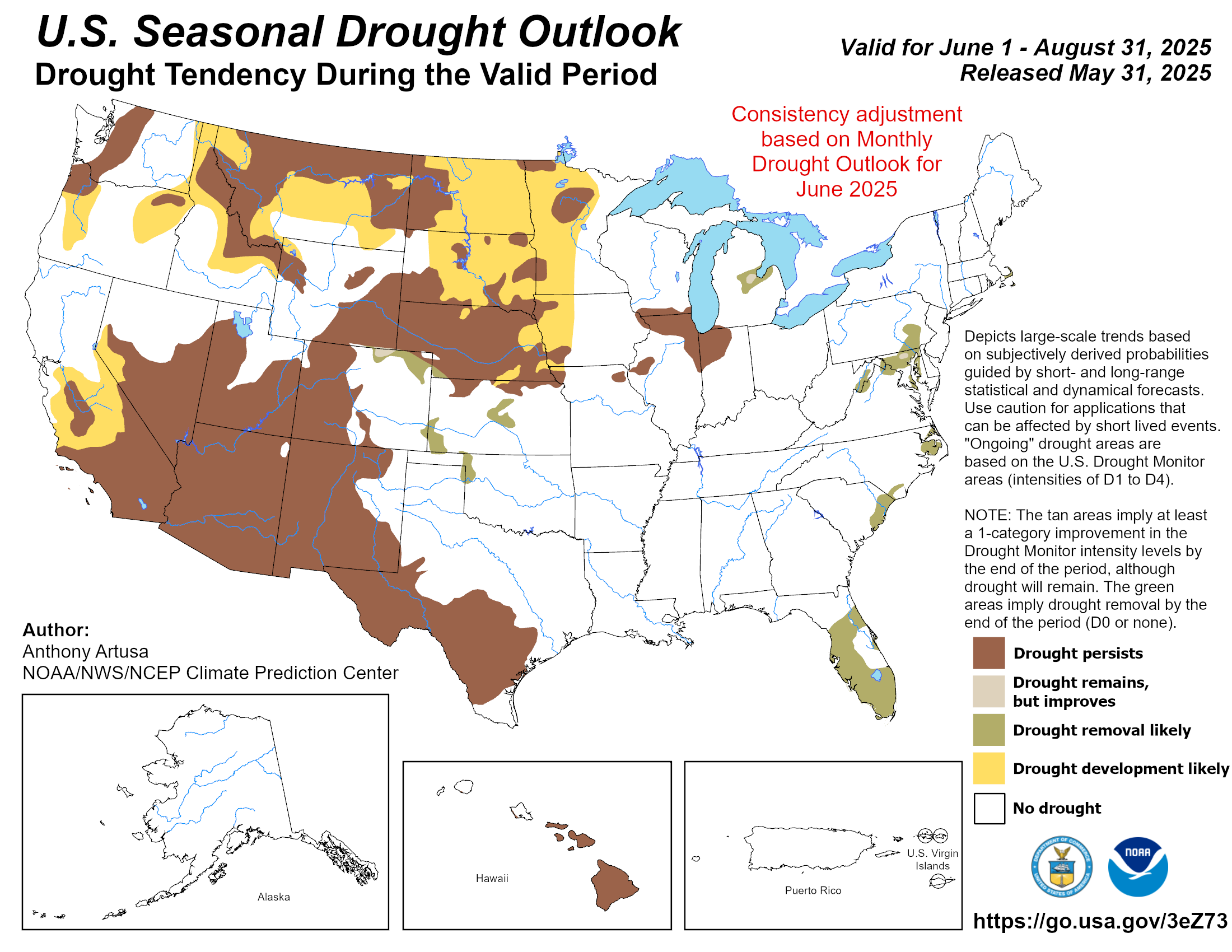
The longer-range drought outlook remains concerning, as the NOAA report explained that the dry weather is expected to continue.
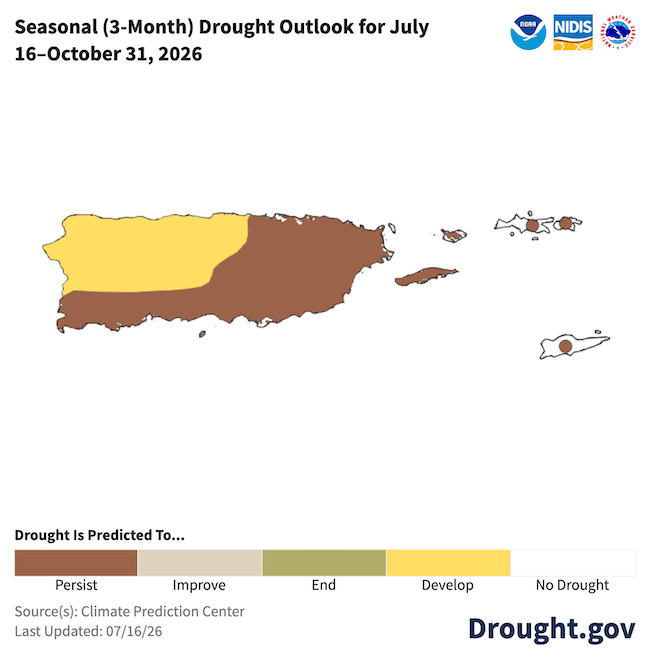
“Forecast models indicate a greater than 70% likelihood of below-normal precipitation and above-normal temperatures for Puerto Rico and the U.S. Virgin Islands from August through October 2026,” the NOAA report revealed. “The North American Multi-Model Ensemble favors below-normal precipitation and above-normal temperatures over the next three months.”
“A strengthening El Niño event is projected to reduce the frequency of tropical waves and cyclones,” the report said “This will likely exacerbate precipitation deficits, leading to persistent or worsening drought conditions across the region, consistent with the latest NOAA Seasonal Drought Outlook.”
As the Source recently reported, Emanuel Rodríguez-González, service hydrologist and meteorologist at the NWS in San Juan, said the unusually dry pattern may extend beyond the next several months.
“Ultimately, climate models still predict below-normal precipitation stretching into the winter months,” Rodríguez-González emphasized.
As of Thursday, the National Hurricane Center was continuing to monitor only one tropical system in the Atlantic basin, Tropical Storm Bertha, located in the Gulf region. The system is expected to dissipate by Friday.
Local Updates
Information regarding the weather conditions across the USVI is available from the NWS, the NHC, and NOAA. Additionally, the local forecast is regularly updated on the Source Weather Page, and a weekly video forecast is available.
Residents, visitors, and agriculturalists can stay updated on the latest drought information on the NIDIS website.