The Virgin Islands is full of treasures — including people — who are not widely known but certainly deserving of greater honor. One of them is Roy J. Caldwood, age 103, who may be the last living Buffalo Soldier from World War II.
Caldwood was born and raised in New York, but his parents were both born in the British Virgin Islands. He now lives with his daughter Diane Royer and her husband Donald, primarily in Tampa, but they regularly spend time at a home they built on family land in Jost Van Dyke in the BVI. 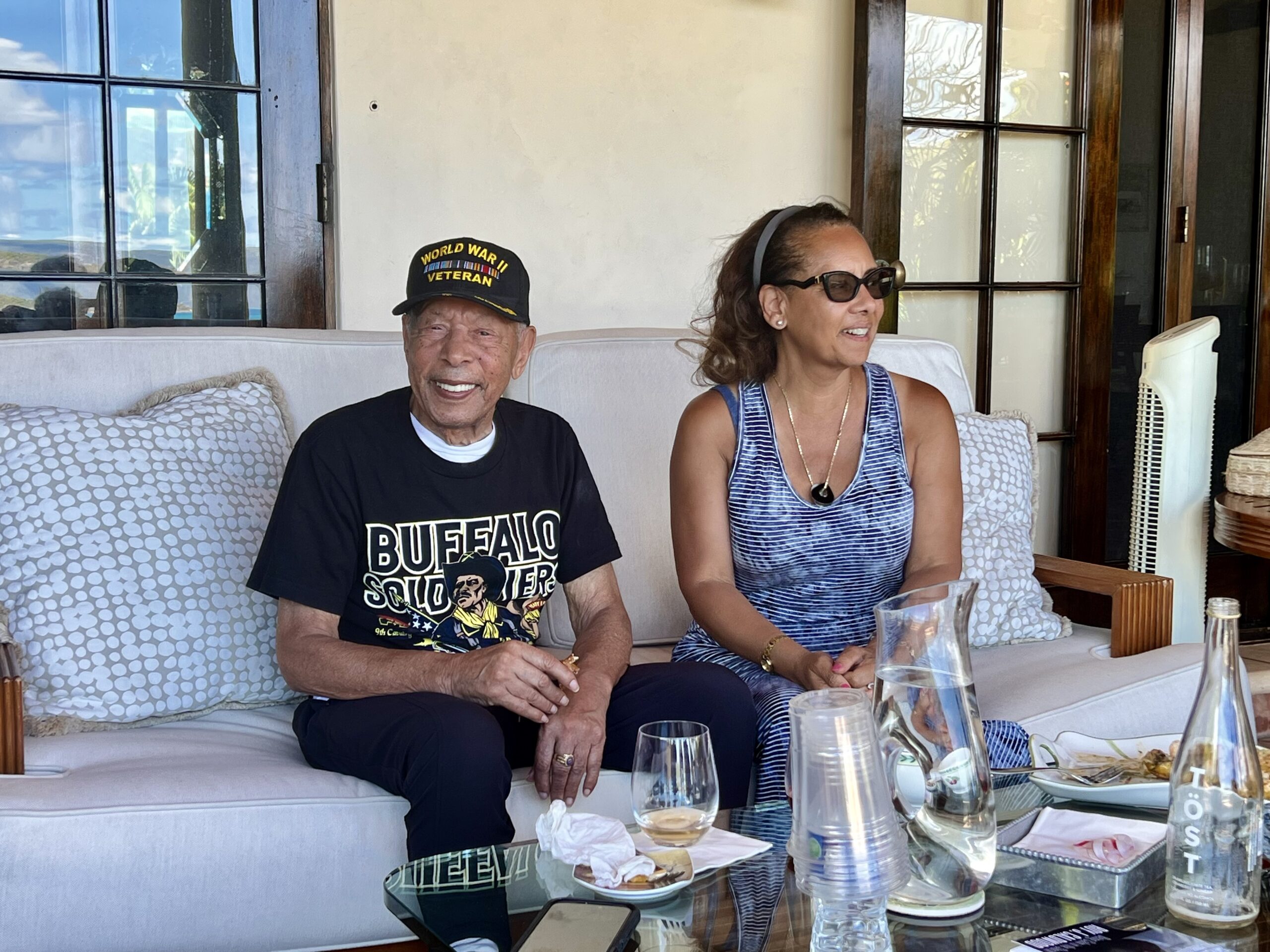
High on a hill near their BVI home is a historic sign that commemorates Caldwood’s humanitarianism and heroism as he fought in WWII against the Germans in Italy in 1944-45 as part of a division of African American soldiers.
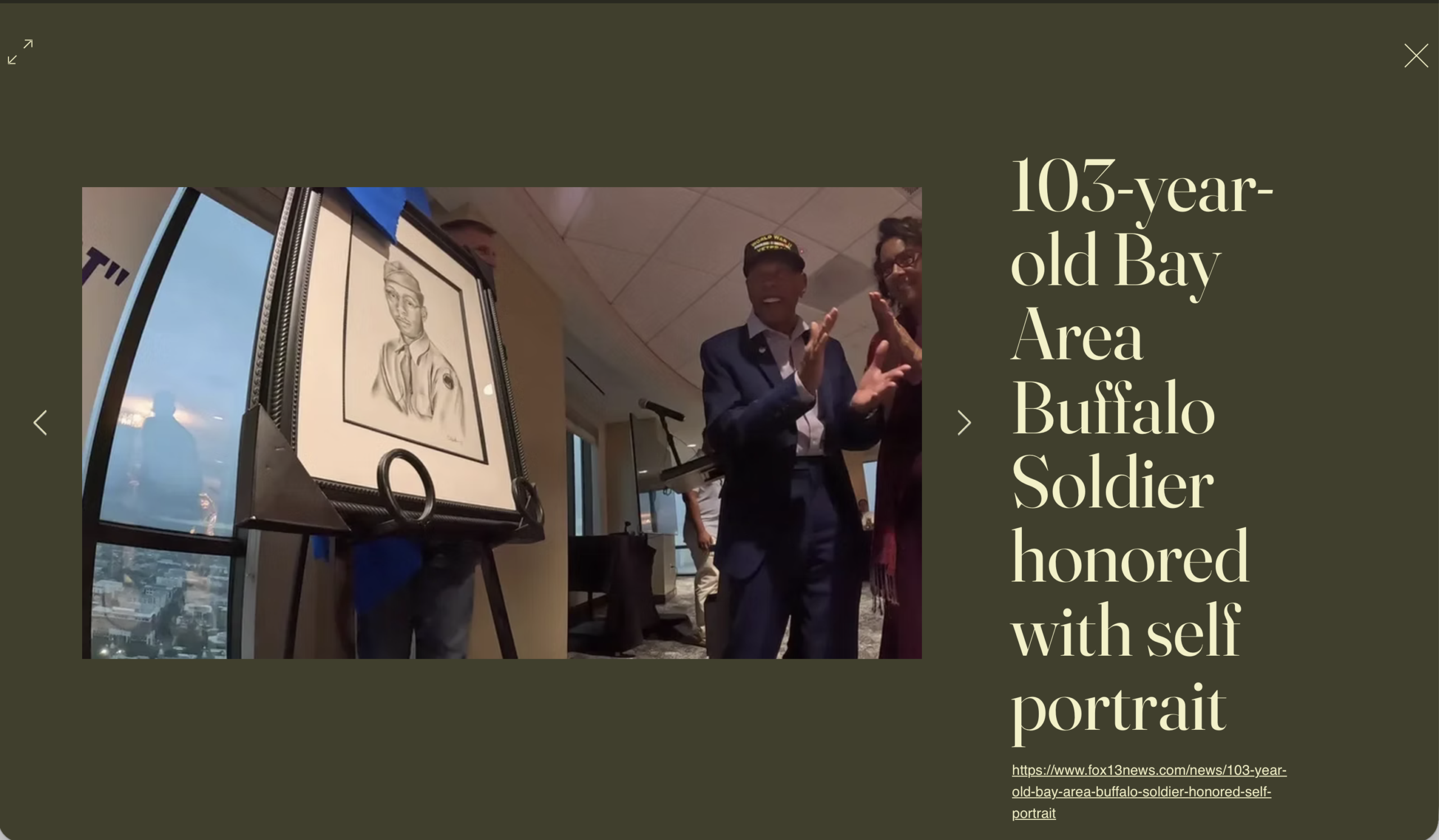
Roy Caldwood was born in Harlem, New York City, on July 10, 1922.
“His parents’ home was always a welcoming location for extended family and friends who needed a place to stay,” according to a biography supplied by his family. “It was truly a melting pot of many Caribbean island people, extended families and a true sense of love for God, community, fellowship and a constant strive for excellence …. even amid discrimination, financial struggles and at times frigid weather conditions.”
At the age of 21, Caldwood joined the U.S. Army and was receiving training at Fort Patrick Henry in 1943 — expecting to be assigned to a logistics battalion in the segregated army — when he learned about openings for the 92nd Infantry Division, the famous Buffalo Soldiers.
That division, made up of African Americans from around the country, traces its roots back to WWI. Before being sent to France in 1918, the soldiers of the 92nd selected the buffalo as their insignia, paying homage to the African American cavalrymen of the 19th century.
Volunteering with the Buffalo Soldiers meant Caldwood could play more than a supporting role to a white division — he would see combat. He was transferred to Fort Huachuca (in Arizona) and received training to become a medic. He was assigned as a medic to the 92nd Infantry Reconnaissance Troop 2nd Platoon and deployed to Italy. In several interviews, he says he was proud to face battle, and proud to save lives of both soldiers and civilians.
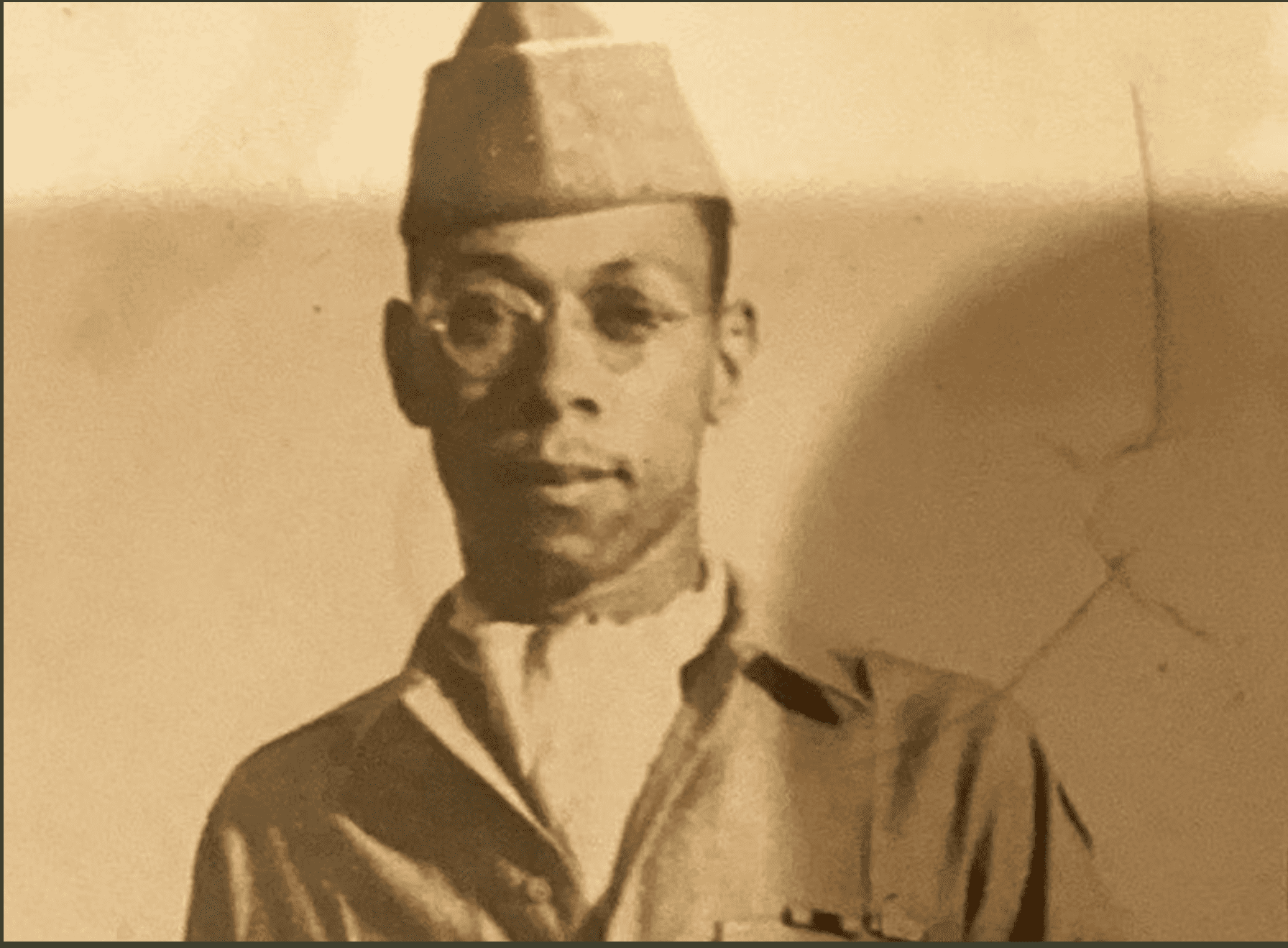
Caldwood’s experiences are well documented as part of the West Point Center for Oral History. During the two-and-a-half-hour video, he tells stories of his upbringing, recounts incidents of racism, recalls the surprising absence of racism among Italians while in Italy, and narrates his adventures as he fought the Germans in the Italian mountains during the WWII Italian Campaign.
When asked by the interviewer what his military service meant to him now, Caldwood said, “I learned a lot. When I deployed to Italy, I learned how it felt to be white … to go anyplace …(with) no such thing as discrimination.” It was rare for Blacks to feel that way, he added.
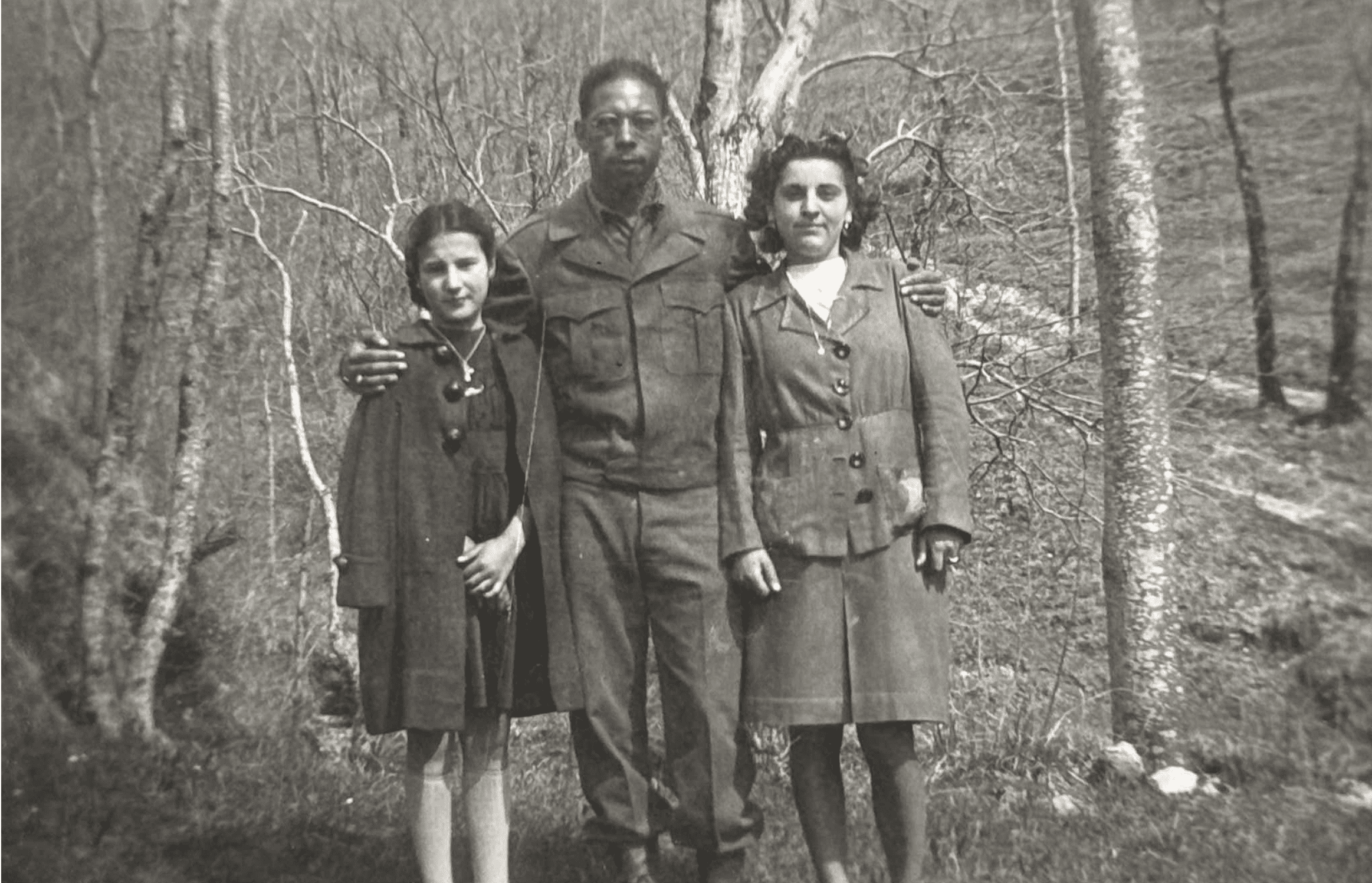
A listener to Caldwood’s interview soon realizes how unique his experiences were. Caldwood has a natural curiosity about people and a facility with languages. Unfazed by the fact that many villagers had never seen an African American before, he boldly embraced his role, which required interaction with Italian people, including three sisters who used their shared knowledge of French to teach him Italian.
By April 1945, the end of the war was approaching. There was little food, and the Italians were suffering from hunger while the Germans were still engaged in battle as they clung to their mountain stronghold.
Caldwood volunteered to escort some village women to a nearby town in search of food. Wearing his helmet emblazoned with the red cross insignia, Caldwood, along with two other soldiers and the women, set out in a snowstorm.
He didn’t realize that they would have to pass along part of a road known as “Purple Heart Stretch,” so named because travelers could be so easily spotted and picked off by German soldiers firing from the hills above. (In the military, there is a “Purple Heart” medal for those injured or killed in war activity.)
The search for food produced nothing, and as the party trudged back along the road, the Germans started firing mortars; Caldwood found it odd that the mortars kept missing them.
“They were speaking to us,” Caldwood says in the West Point interview. “Do you know how? They dropped a mortar right next to us. They were known for their accuracy. I knew the next one wouldn’t miss us. We ran to the wall. Hid. They opened fire on us … but the shells were not landing where they could hurt us. I deciphered they were not going to hurt us. They realized our humanitarian mission.”
Caldwood stood up and stepped out in the open. No more mortars dropped on them. “I said, ‘Let’s go!’” he continued. Within hours, “a long column of Germans — 30 or 40 in that batch, surrendered to our platoon,” the African American Reconnaissance 2nd Platoon, Caldwood said.
He believes this was the last group of German soldiers to surrender to the U.S. Army during the Italian Campaign. “They knew that they were losing the war and decided that they didn’t have to fight to their death. They could peacefully surrender and hope for a chance to live and one day return to their families.”
This is just one of the many remarkable stories Caldwood tells during the West Point Center for Oral History video. He also describes the events leading to the award of his Bronze Star after he and another medic stayed back to attend to a villager who was very sick while the rest of the division moved on.
As they left to rejoin their comrades, they fell under attack, and Caldwood was thrown into the air, landing nearly 30 feet away. One of Caldwood’s fellow soldiers was sure he was killed, but he survived with shrapnel in his arm and damage to his hearing.
After the war, Caldwood returned to New York. In 1946, he married Muriel Edmead and raised two daughters in Queens. He built a career with the New York City Department of Corrections, spending more than 21 years maintaining calm and order in the New York City prison system.
Starting as a young recruit, Caldwood rose to the rank of Assistant Deputy Warden on Rikers Island, honing a humanistic style that many officers, wardens and commissioners worked to implement as the most effective way to treat inmates. He received the Commissioner’s Award for Bravery in 2001.
His book, “Making the Right Moves: Rikers Island & NYC Corrections: Being Calm in the Storm,” describes his experiences there, which include being taken hostage during a prison uprising in 1972.
Roy J. Caldwood and his family return throughout the year to their home in Jost Van Dyke, Josiah’s Retreat, named in honor of his grandfather. (Caldwood’s father, Felix Callwood, was born on Jost, and his mother, Lucille Smith, was born on Tortola.) It’s unclear why Roy’s last name differs in spelling from the more typical “Callwood,” but he suspects it has something to do with his father’s immigration process.
The Caldwoods are founding members of the JVD Advancement Team, whose mission is to “unify our island and strengthen our combined forces to improve, enhance, and sustain the quality of life and the natural splendor of Jost Van Dyke for residents, visitors, and future generations,” according to his daughter Diane.
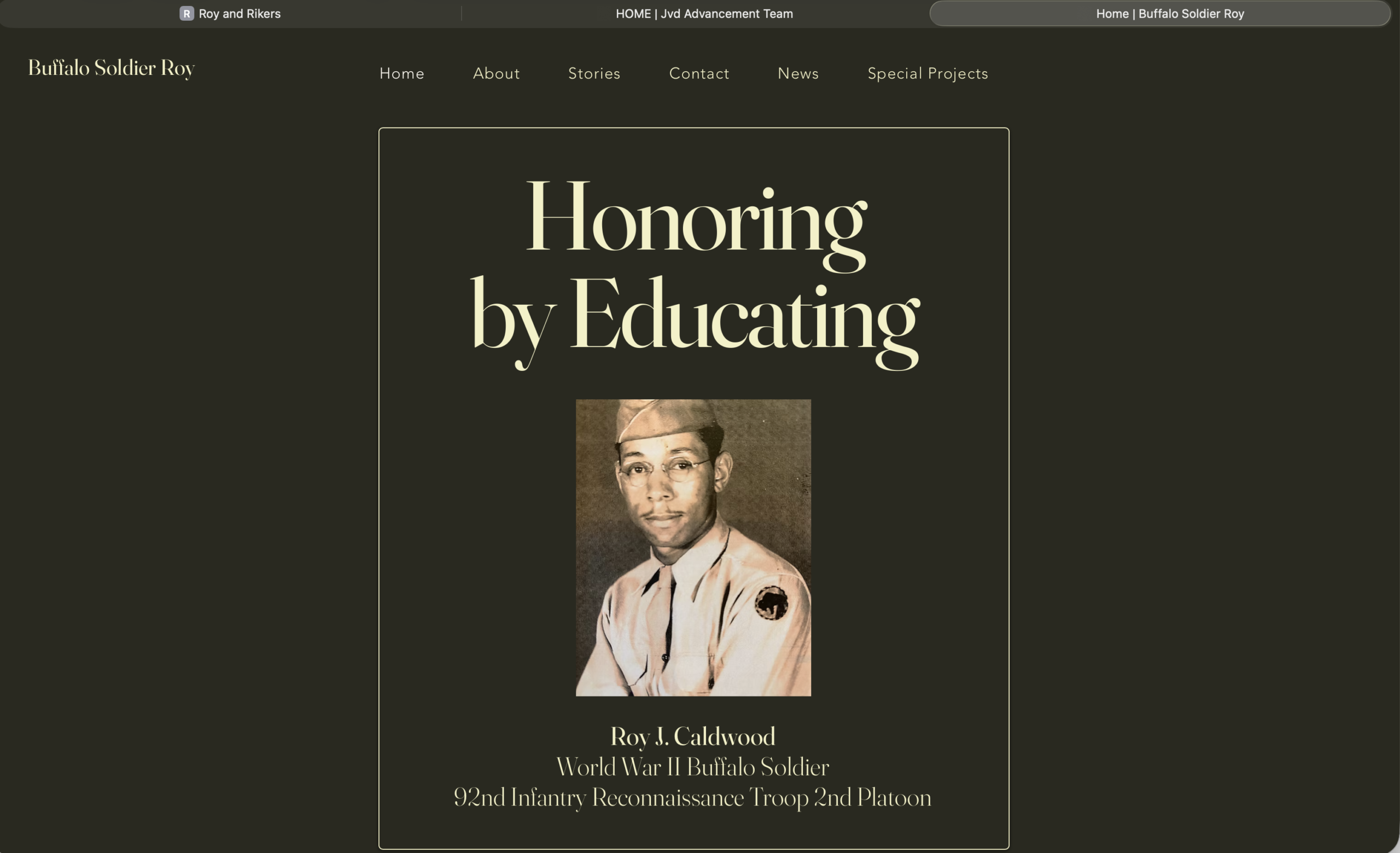
The Royer and Caldwood families are in the process of establishing a museum on Jost Van Dyke. In addition to serving as a testament to the historic WWII experiences of a native son, it will also highlight information, historical facts and key contributions from BVI individuals. For further information or to contact the family, go to https://www.buffalosoldierroy.com.