

Editor’s note: This is part 2 of a report about a St. John town hall meeting on Wednesday. Part 1 is available here.
A woman has lost $500 worth of critical medication that requires refrigeration.
A mother is unable to heat formula for her newborn.
A vulnerable senior becomes severely stressed after days without current.

A parent now wonders where to find the money to replace food that spoiled.

St. John residents confronted Water and Power Authority CEO Karl Knight with these and other examples of their suffering when he met with them at a town hall meeting Wednesday night to discuss a power outage that lasted three nights and two days.
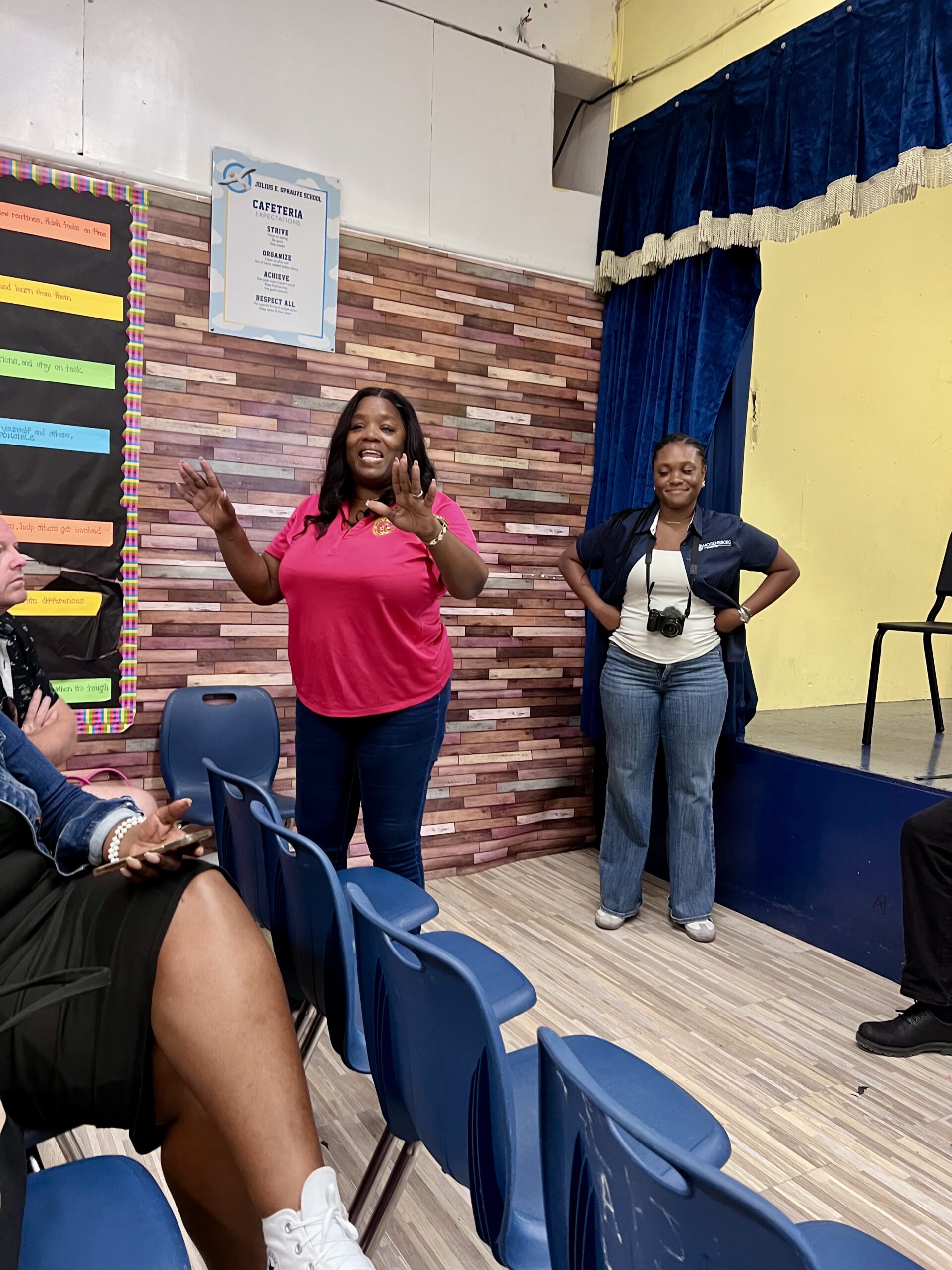
During the three-hour meeting that became raucous at times, residents were intent on letting Knight know that they were tired of excuses, frustrated by WAPA’s lack of communication during the outage, and serious about seeking some form of recompense for their losses.
“WAPA is not in the financial situation to reimburse people. I wish we were,” said Knight. “I don’t have the funds, but that doesn’t mean we can’t as a community come up with a solution.”
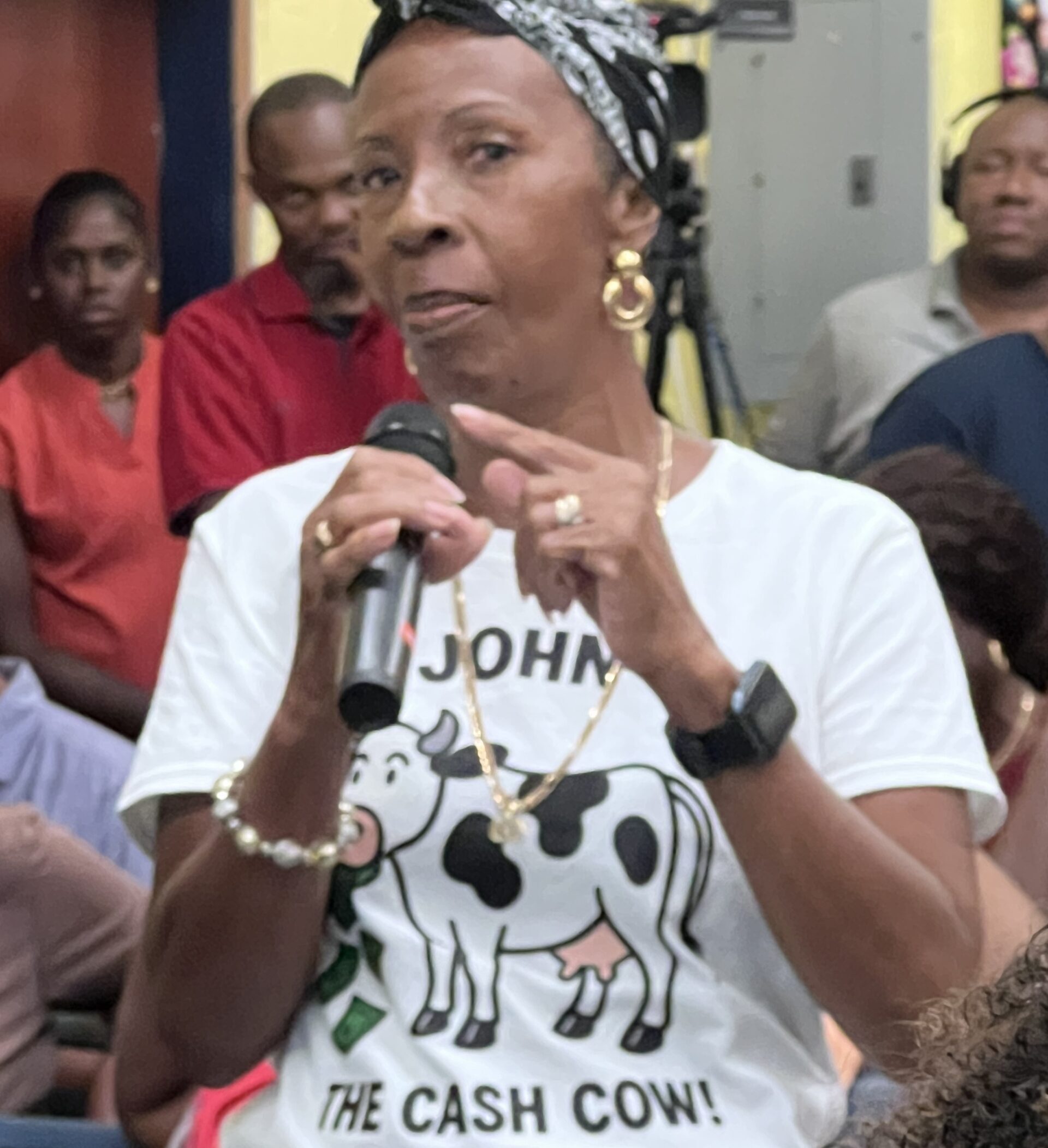
Outside of the meeting, demonstrators held signs and circulated information for accessing a petition calling for the governor to declare a state of emergency. A declaration could trigger emergency funds that could help residents replace food and appliances destroyed by the outage as well as lead to federal funding to rebuild critical infrastructure, according to Delegate Stacey Plaskett.
“It’s increasingly exhausting. We’re demanding accountability,” said Raven Phillips. “What happened to the plans for generators in Cruz Bay and Coral Bay? That plan dated back to 2019. If it fell through, we want to know what the back-up plan is now.”
During the meeting, Knight answered those questions. He said WAPA had sought funding for the generators and selected a contractor, but technical consultants raised logistical questions about putting a generator on a piece of government land in Coral Bay. They also had concerns about whether there was adequate space in the site at Frank Bay for the Cruz Bay generator. By the time they got close to resolving these issues, the generators had gone out of production, and plans languished.
“We’re now going back to the original plan for 5 megawatts of standby generation at Frank Bay (near Cruz Bay) and 5 megawatts at Coral Bay,” Knight said. “Sixty-percent of the design work has been completed for Cruz Bay, and 30% has been completed for Coral Bay. We hope to start construction in 2027.”
Knight said the two generators would be sufficient to power the entire island, but the real relief will come in the form of redundancy in transmission lines through submarine cables from St. Thomas.
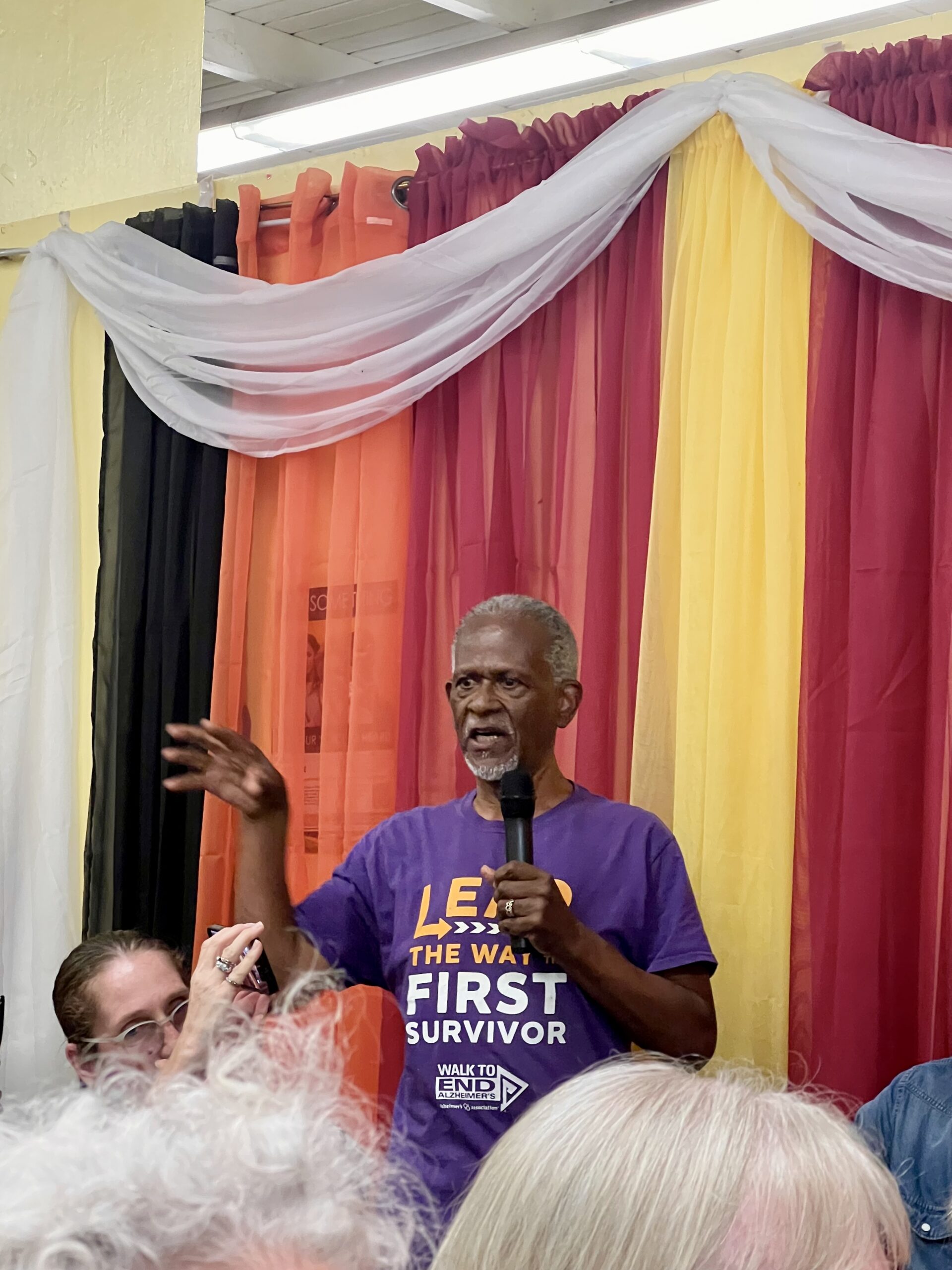
Alan Smith, a former head of DPNR, said that planners did not anticipate the population growth and rise in tourism on St. John decades ago. “Back in the 1950s, St. John was intended as the conservation island, and that mentality has captured us in this way.”
Residents questioned whether WAPA planners were now similarly mistaken by not anticipating a changing geopolitical landscape (which affects the cost of fossil fuels) while overlooking renewable resources available now in the islands. “Why are we still talking about petroleum products with all our sun and wind?” asked Leeanne DiGiacomo.
Knight said he was intent on building a utility for the future. “Fossil fuel generation is the backbone (of our system) but I’m more excited about what we’re doing with batteries and solar generation.”
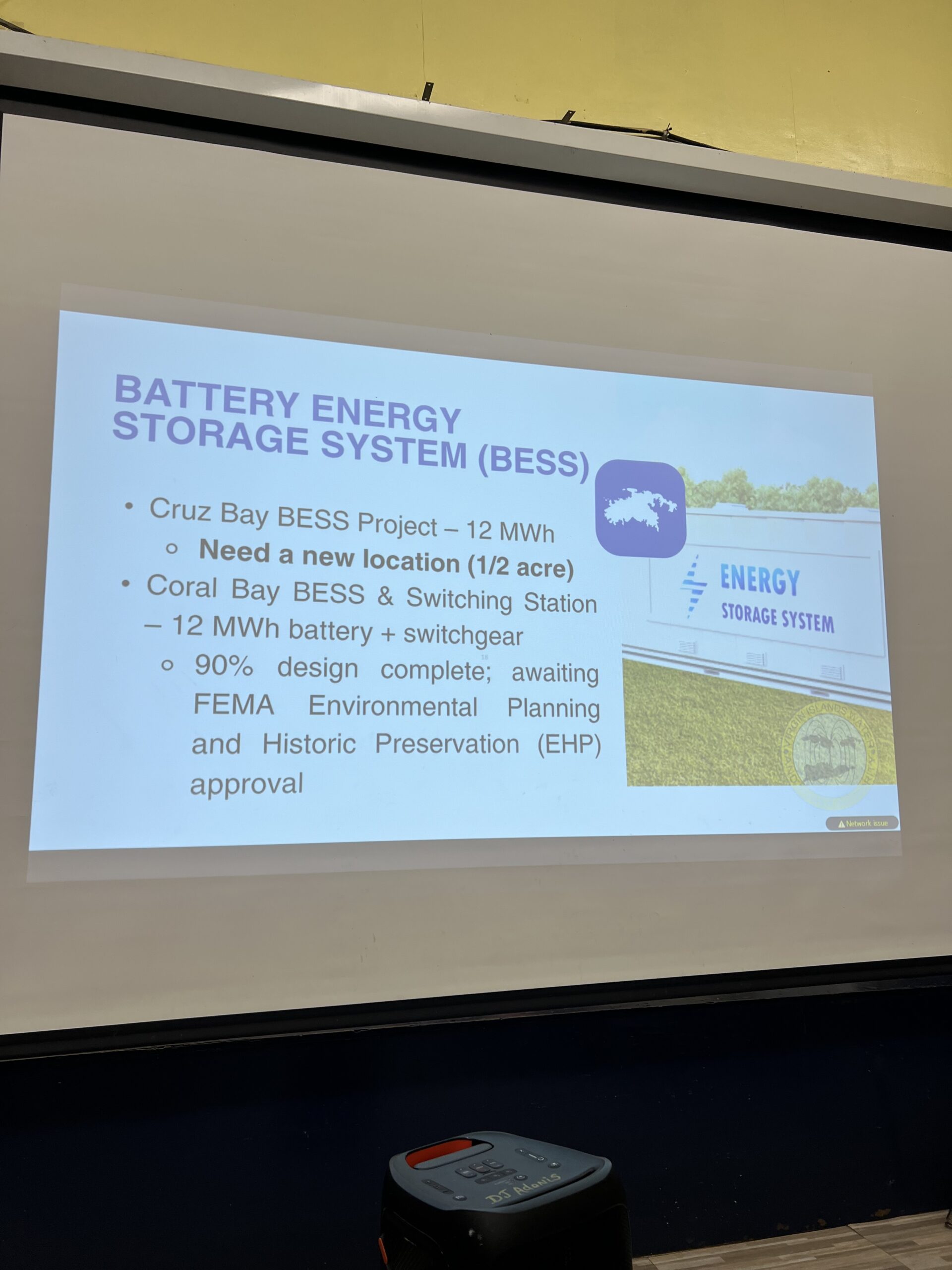
WAPA has plans to build solar arrays in Bovoni and Fortuna on St. Thomas, and Knight said he wants to construct a solar array on St. John as well as a 12-MW battery storage system. Officials are now looking at a government-owned site in Cruz Bay, he said.
Residents chastised Knight for WAPA’s failure to send out alerts informing the public of the reasons for the outage, which began March 14, and not explaining what was being done to correct the problem.
Knight acknowledged that there was a lack of communication. “I’m not denying what you’re saying. The alerts are not automatic. (They require) real human beings being up at whatever hour to put out an alert.”
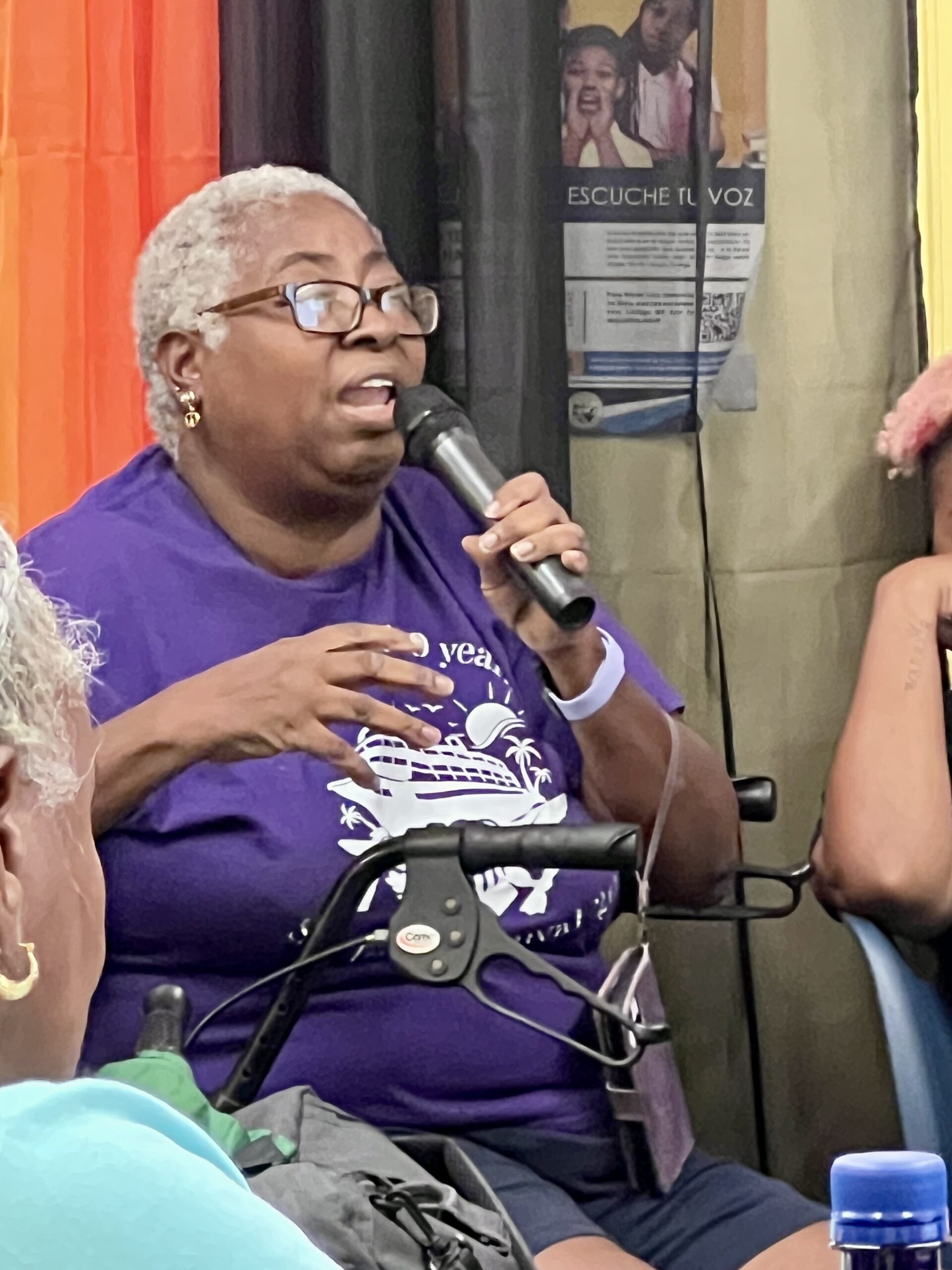
He said the problem grew in complexity (see part 1 of this story). “We thought we had power restored, and three hours later we were back at it,” he said. “We take every outage seriously and work around the clock to fix them. No one feels it more than WAPA employees …. The lights go out for our friends, our families, our classmates. We get cussing and tongue lashings from our families.”
Residents also aired grievances involving billing issues, some from estimated bills, some from non-functioning meters, and some from problems with solar generation.
One resident said his meter had been read only three times in 4 1/2 years, and the estimates have been wrong. “Fortunately, I have a Tesla system, and they tell us exactly what our usage is. But your billing department says they don’t accept information from outside providers.”
Knight said, “A lot of residents have developers put in solar, but to properly credit solar production, you have to fill out an application.” Customers with solar systems should apply to nebapply@viwapa.vi.
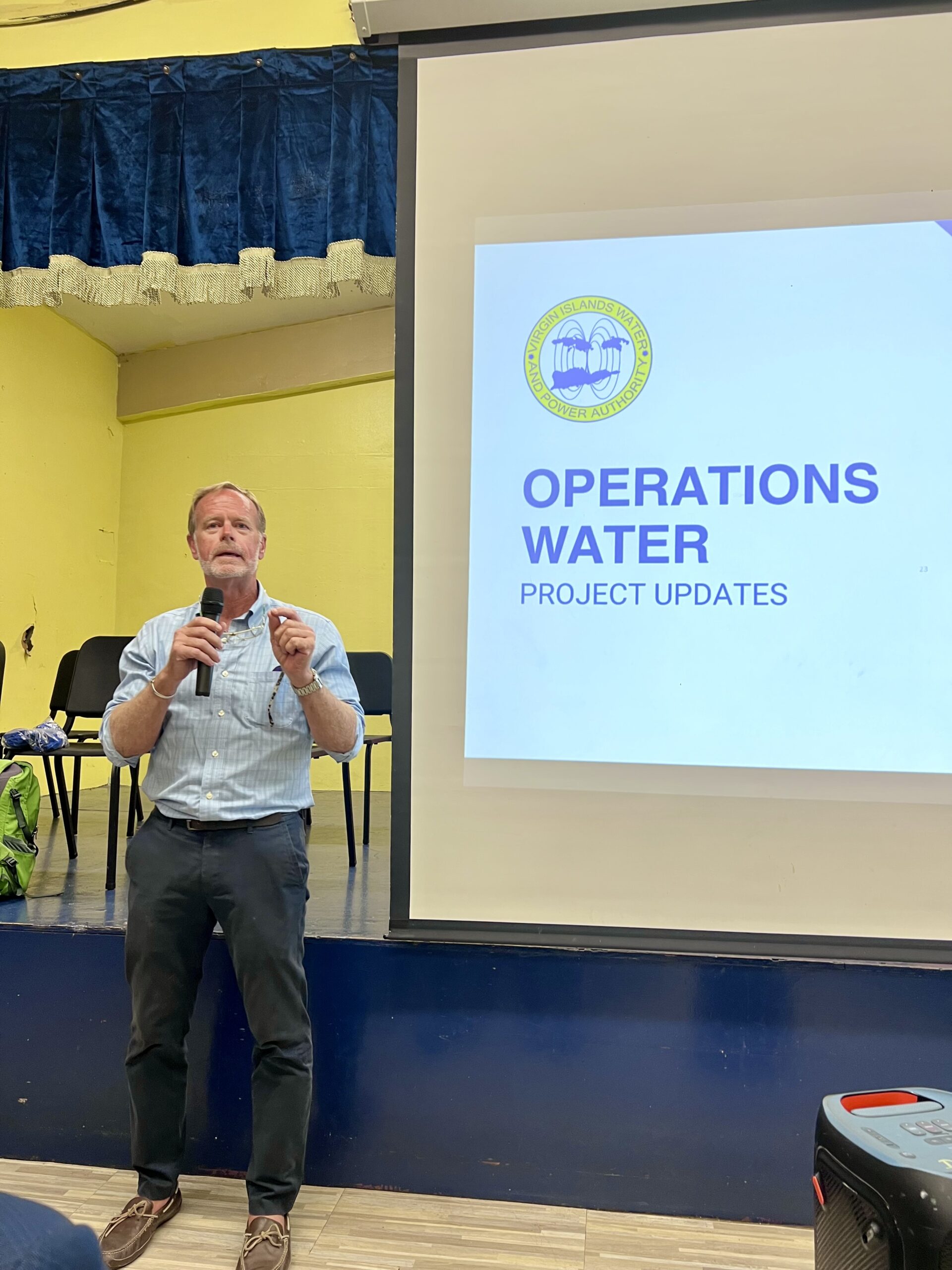
Knight introduced Brian Walden, who was hired to bring back the Net Energy Billing (NEB) program in October. The program allows customers who generate solar energy to send their unused power back into the WAPA grid and earn billing credit.
“All utility companies at some point estimate bills,” Knight said, but the situation on St. John has gotten worse since the two meter readers on the island retired.
The territory has had trouble with meters since the hurricanes in 2017 when nearly half of the meters failed. WAPA hired a company to modify the meters, but that fix also failed, resulting in a class action lawsuit against WAPA in 2021.
Knight estimated that there were 10,000 broken meters in the territory. Of those, 9,000 were replaced, and although they are accurate, they are not “smart” and will need to be replaced.
Now WAPA is moving forward with another company to provide smart meters, which are manufactured to be read remotely.
“We’re working with a company with a great reputation,” Knight said. “There are now 56,000 new meters on island, and we will start deploying them on St. John in September. The delay has to do with installing the network infrastructure.” Once the system is in, “we will no longer be deploying meter reading.” Until then, WAPA is seeking to hire two meter readers on St. John to replace the two that retired.
Towards the end of the meeting, Kurt Marsh spoke up. “These conversations are stressful because they are not new,” he said. “Everything you talk about tonight, deliver! We are vexed about all the things that haven’t happened.”
He called out Knight as the governor’s former chief of staff, as well as senators, the island administrator, and the governor, to do better.
Knight responded, “I started my career with WAPA. I’m here because I don’t run from responsibility. I don’t come to make excuses. I’m telling you what we’re going to do, and I wish I could do it sooner. You’re my customers. You can hold me accountable. If I didn’t do it reliably, I sincerely want to apologize.”
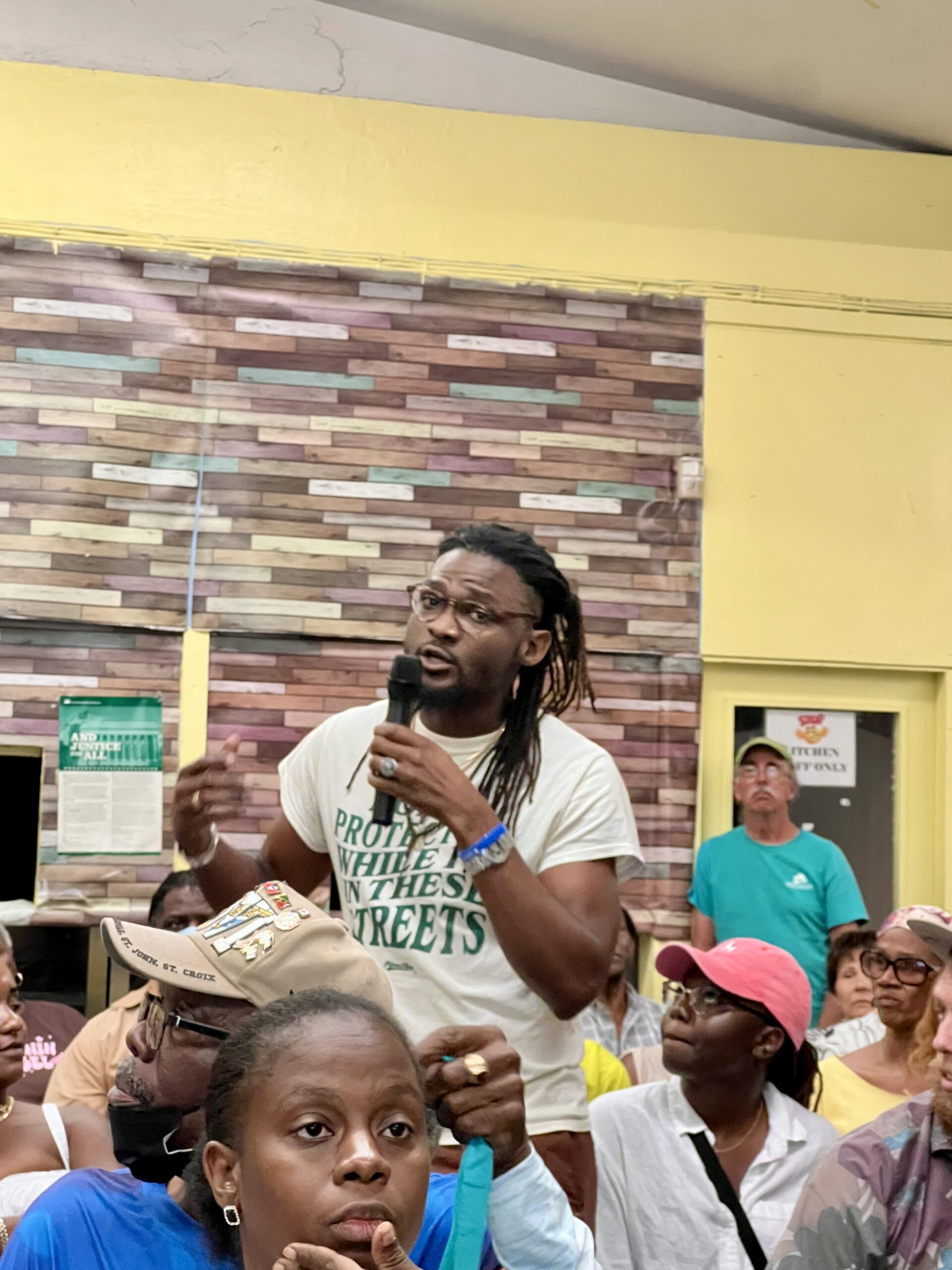
“Find the money to give us some kind of recompense,” replied Marsh.
“I applaud you and your staff,” said Delia Smith. “You’re walking into a tumultuous situation. What’s missing is the human element.” Later in the meeting she asked, “How can we have accountability? Will we have committees? Where are the touchpoints?”
Knight said he didn’t mind meeting more frequently. “I hope at our next meeting there will be a little less anger. And maybe sometime in the future, some applause … . I thank you for being vocal. This is not the end of the conversation.”