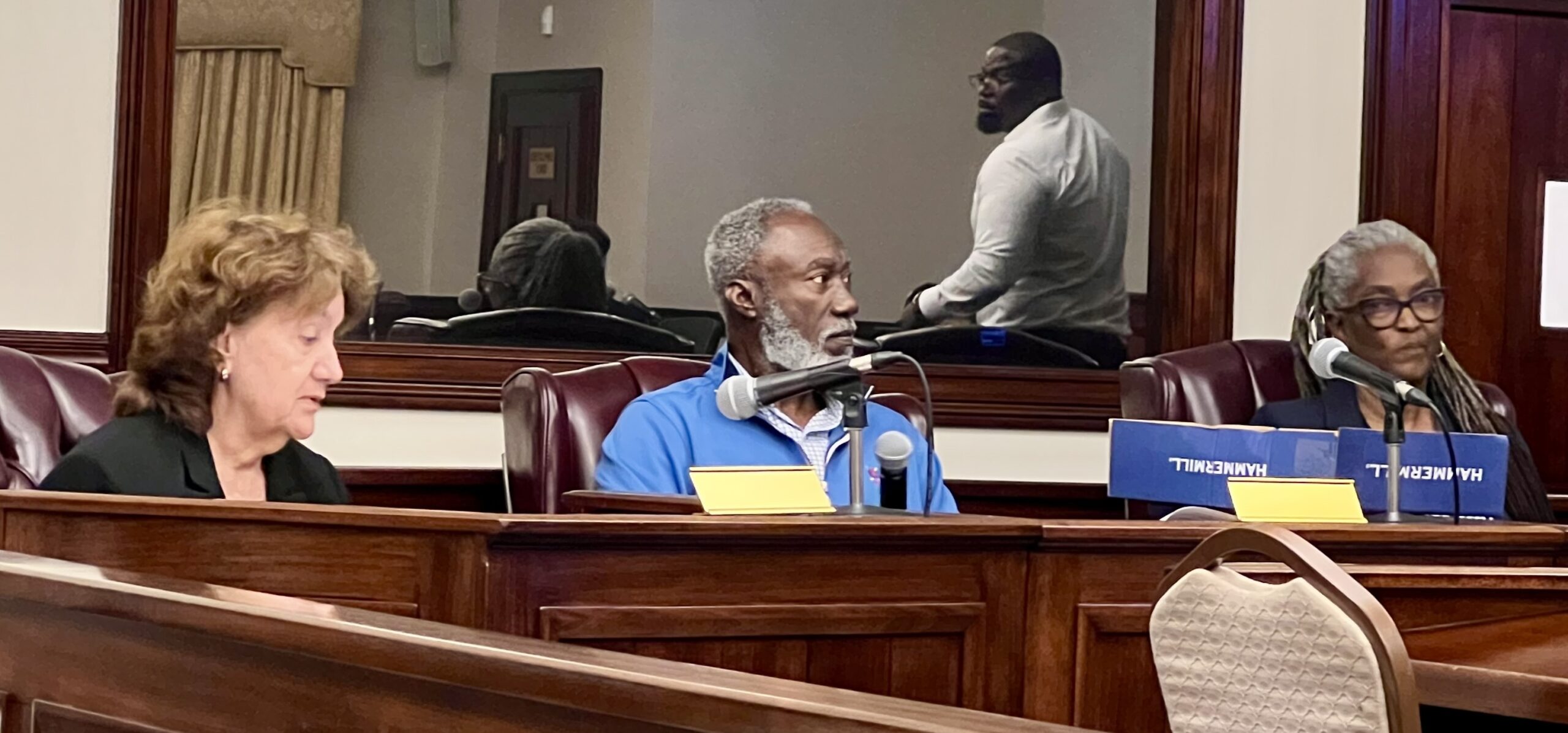
The Public Services Commission shared the latest proposals for increasing ferry rates between St. Thomas and St. John Monday evening at a public hearing in Cruz Bay. A similar meeting will be held Tuesday night on St. Thomas at the Public Services Commission’s office at Barbel Plaza from 6 to 7:30 p.m.
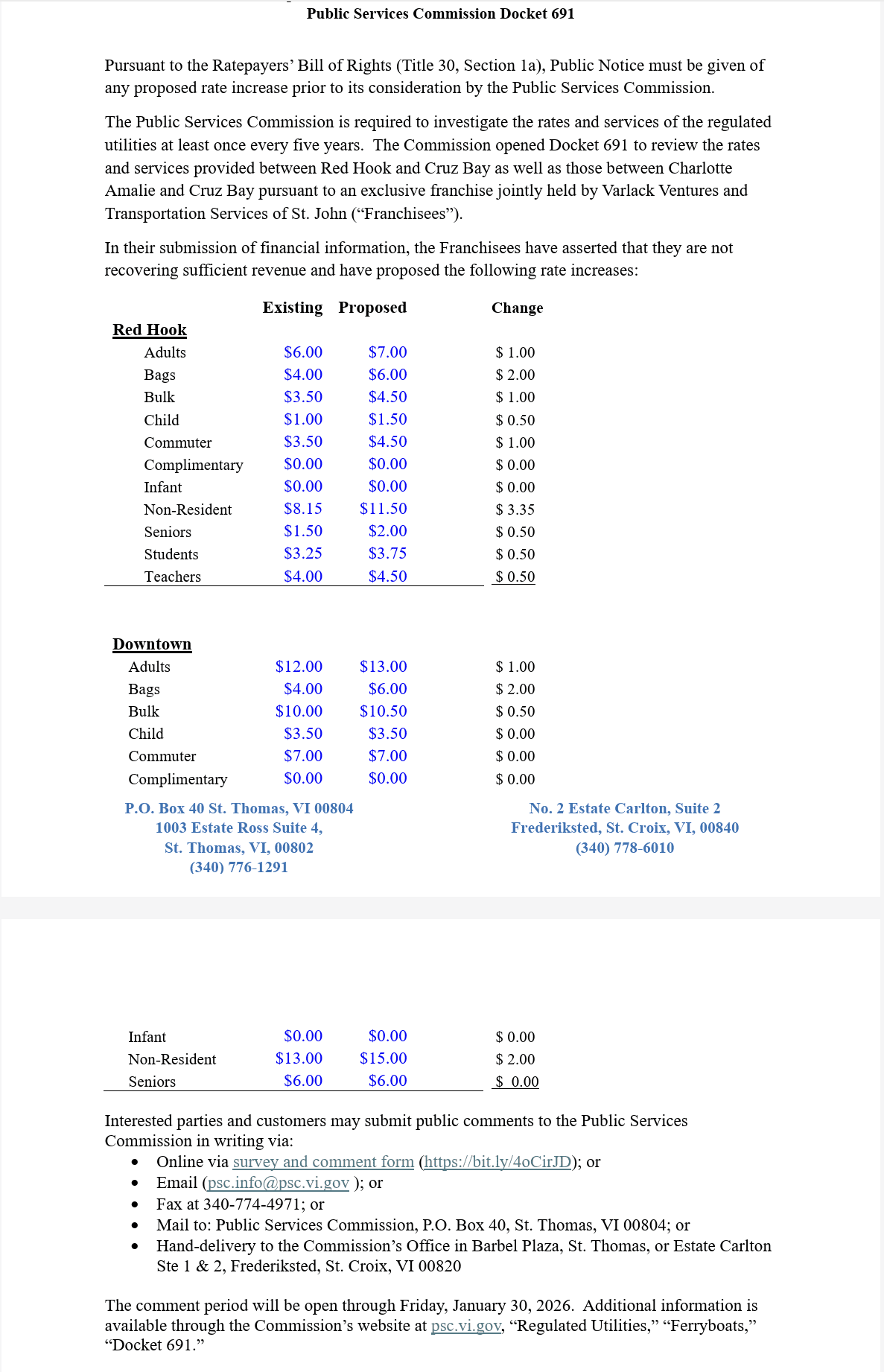
Rates for all categories of passengers will increase, but non-resident passengers will see the steepest increase in rates, according to information presented at the meeting. The rates are also posted on the PSC’s website along with links to submit comments and respond to a survey regarding ferry service.
Resident adult one-way fares from Cruz Bay to Red Hook will go from $6 to $7, a 16.7% increase, while fares for non-resident adults will go from $8.15 to $11.50, a 41.1% jump.
Fares for students, teachers and seniors will be increased 50 cents for each one-way passage.

Residents and visitors will pay $2 more for each bag as the rate jumps from $4 to $6, a 50% increase.
The ticket rates are designed to provide an 8% profit for the two ferry companies, Transportation Services of St. John and Varlack Ventures, which have held the exclusive franchise to provide transportation between Cruz Bay and Red Hook and Cruz Bay and downtown Charlotte Amalie since 1976.
Although the PSC is supposed to hold hearings to adjust the rates every five years, the rates have not been increased since 2013.
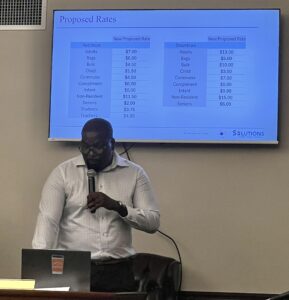
At Monday’s meeting, Avery Williams, a technical consultant hired by the ferry companies, stated, “Based on the projected ridership for the five-year period starting at 2026, if the current rates are maintained, the franchise will lose an average of $300,000 a year. A rate increase is needed to avoid persistent losses.”
Members of the audience agreed with the concept that fares must increase. “I support a rate increase, especially for tourists,” said Clarence Stephenson.
“Tourists choose to come here,” added Waclin Castillo, a barge captain.
Maria Tankenson Hodge, an attorney representing the ferry companies, said the courts have ruled that it’s legal to set separate rates for residents and visitors because “Our taxes support infrastructure.” She said residents need the ferries to get to work, to school, to hospitals and to other government services, and there’s evidence that “locals can’t afford more, and visitors can pay more.”
The routes are designated as part of the Federal Highways system and therefore qualify to compete for federal grants. Federal grants funded two new ferries (the Cruz Bay 1 and Red Hook 1) that went into operation in 2014. The Spirit of 1733, also funded by federal monies, was launched in 2024.
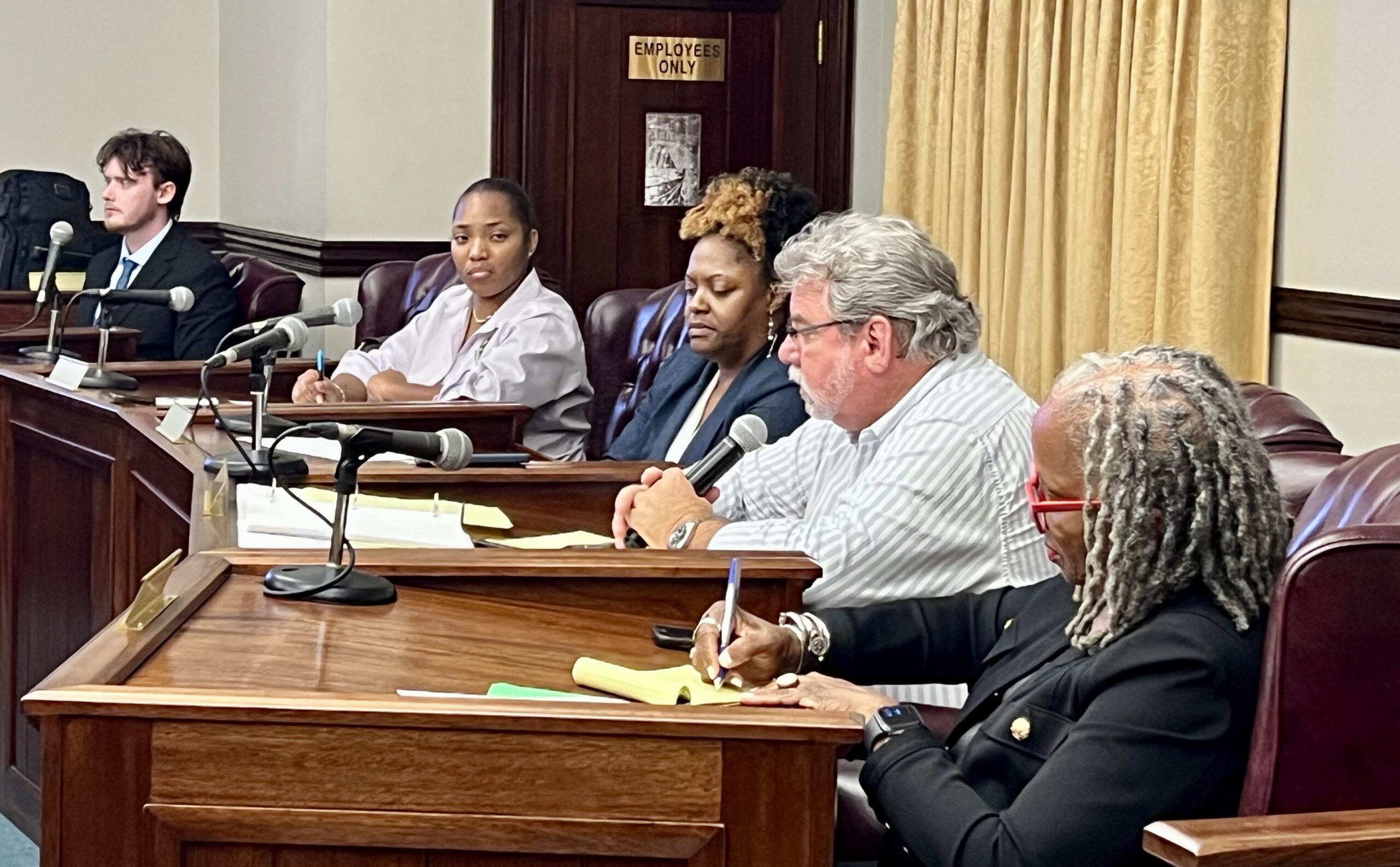
Boyd Sprehn, an attorney for the PSC, said the commission will consider a number of issues as it deliberates the final rates. Since federal grants have provided funding for three ferries in the past 12 years, there’s a question of whether non-resident Americans actually support the territory’s infrastructure as well.
Sprehn said another question was whether the Cruz Bay to Charlotte Amalie route should continue to be included as part of the franchise. The franchise agreement calls for year-round service, but the ferry companies generally cease operation of this route during the slow summer and fall months.
The ferry companies also are slated to receive $200,000 annually in local government subsidies. St. John resident Hadiya Sewer asked whether the ferry companies have received these subsidies regularly.
“It’s fair to ask what is the annual subsidy,” said Sprehn. “It varies wildly. Some years the Legislature hands it out, and some years they don’t.”
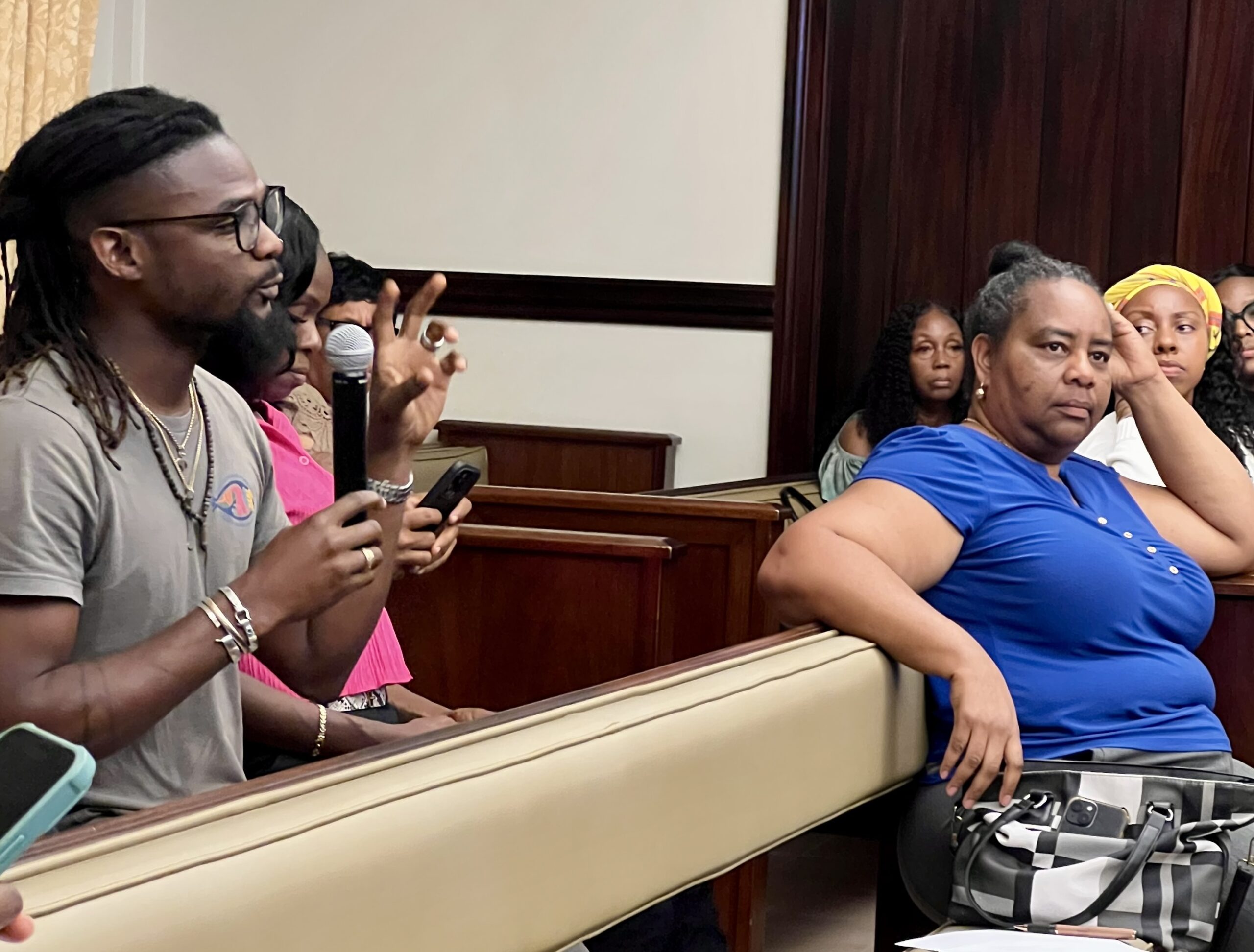
St. John resident Kurt Marsh asked PSC officials why the Virgin Islands Port Authority is not under their jurisdiction when “VIPA has levied fees on these (ferry) companies, and now we have to raise the rates.” Fees for ferry dockage were recently increased and will be phased in over the next three years.
Marsh also asked that the PSC consider regulating the barges that operate between Cruz Bay and Red Hook.
Sprehn responded that the PSC does not set its own jurisdiction. “That’s the Legislature’s choice. We’re open to discussing this with the Legislature,” he said.
Deborah Charles, a resident of St. John, asked whether the “new” ferries have provided relief in operational costs.
“There has been improvement with our image,” said Delrise Varlack, general manager of Varlack Ventures, “but they are more technically involved. The parts and supplies cannot be found in the Virgin Islands, so we have to go abroad to get parts, even as far as Germany.”
Varlack said the two ferry companies were not consulted when the V.I. Public Works Department applied for the grants to fund the ferries in 2014 and did not participate in their design. However, the ferry companies were involved in the design of the ferry acquired in 2024.
Hearing examiner Jed JohnHope urged the public to fill out the survey and provide comments on the PSC’s website.